5 Reasons Bird Photographers and Enthusiasts Should Visit Epupa Falls in Namibia

Birding in Epupa Falls: A Birder's Guide to Kaokoland

If you are travelling through Namibia with binoculars in your luggage, Epupa Falls deserves a place on your itinerary.

At first glance, this remote corner of Kaokoland might seem like an unlikely birding destination. The surrounding landscape is rugged and dry, with rocky mountains, dusty tracks and vast stretches of seemingly endless wilderness.

Then you reach the Kunene River.

The river cuts a green ribbon through the landscape, creating a completely different habitat from the surrounding semi-desert. Add the waterfalls, riverine vegetation, palm trees, rocky gorges and surrounding mountains, and suddenly there are plenty of reasons for birds to be here.

And they are.

Around 240 bird species have been recorded in the Epupa area, making it an excellent destination for both keen birders and photographers looking for something a little different from the more famous birding destinations in Namibia.

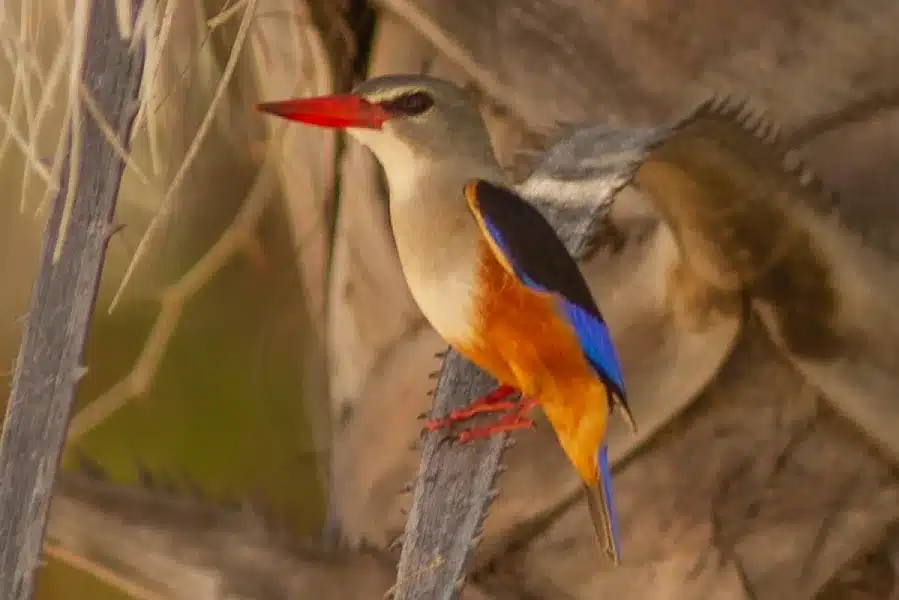
Grey-headed kingfisher - Birding in Epupa Falls

Why is Epupa Falls good for birding?

The secret is habitat diversity.

Epupa sits along the Kunene River, which forms the border between Namibia and Angola. In an otherwise extremely dry region, the permanent river provides water, vegetation and food, creating a surprisingly rich environment for birds.

You can move from the riverbank into the surrounding rocky hills and gorges, and the birdlife changes with the landscape.

This makes Epupa particularly rewarding for photographers.

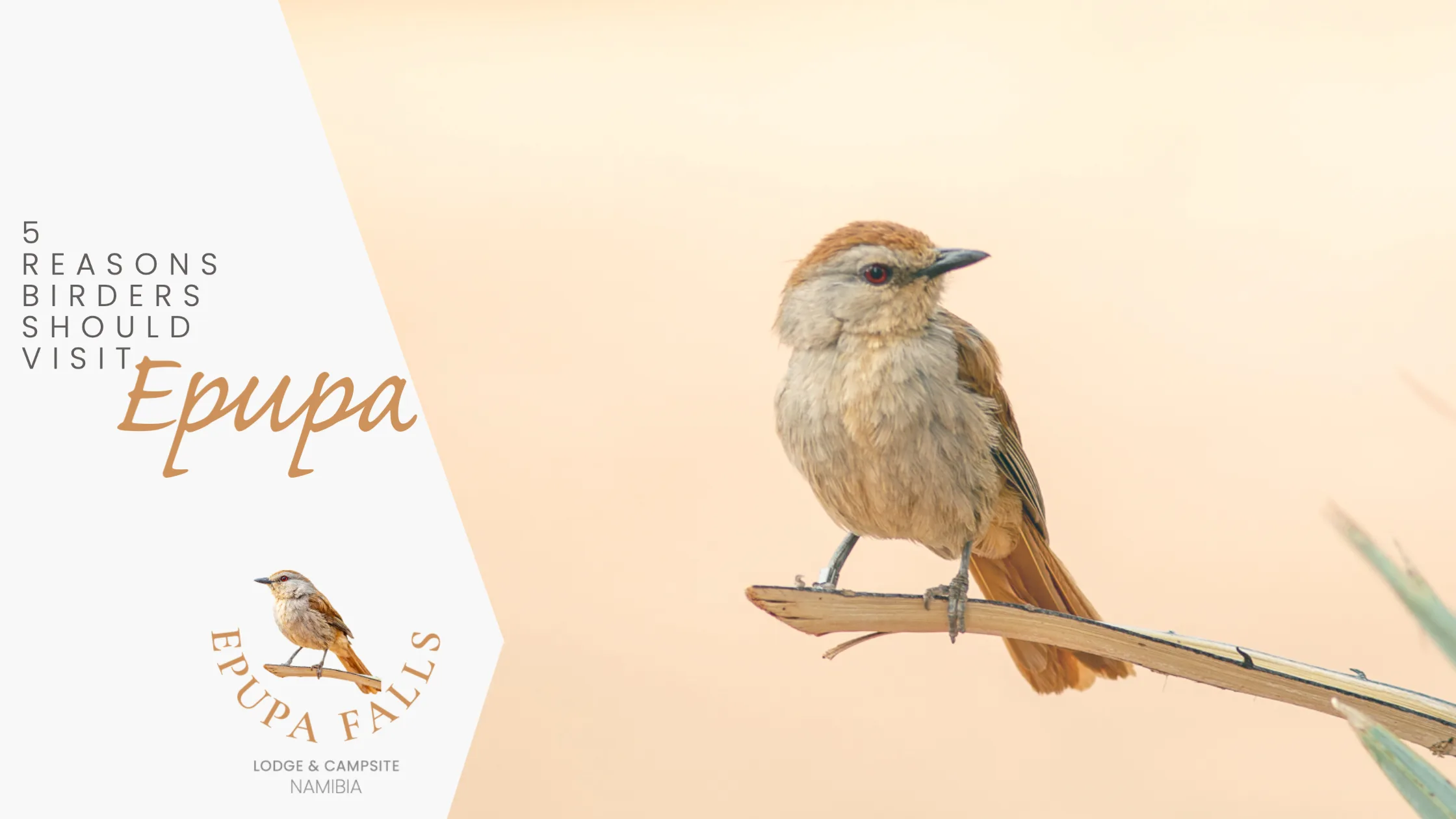
One moment you might be watching a kingfisher along the river. A few minutes later, you could be scanning the palms for a Rufous-tailed Palm-Thrush or looking towards the rocky hills for a hornbill.

You never quite know what is going to appear next.

epupa falls birding activity on kunene river

Birds you may see around Epupa Falls

The birdlife around Epupa includes a fascinating mix of riverine, dry-country and woodland species.

Some of the birds birders may hope to see include:

  • Rufous-tailed Palm-Thrush
  • Monteiro’s Hornbill
  • Rüppell’s Parrot
  • Rosy-faced Lovebird
  • African Fish-Eagle
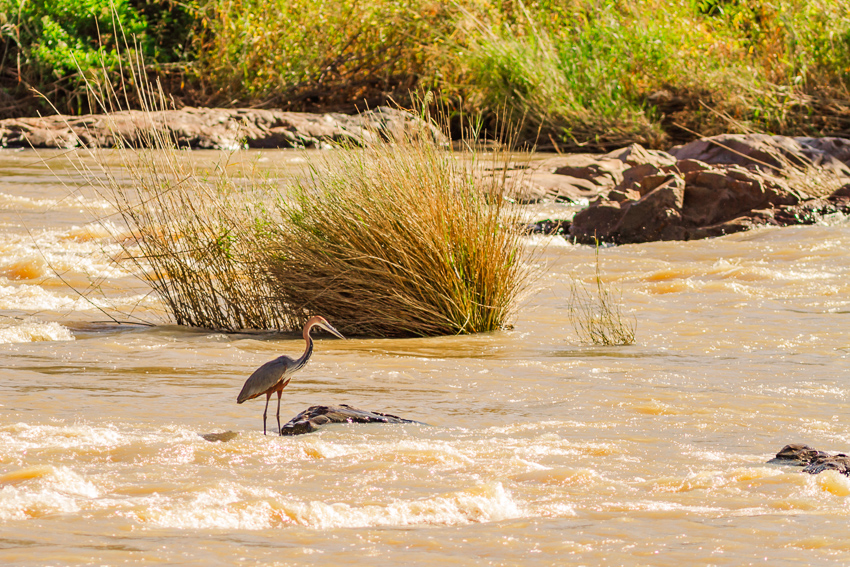
  • Goliath Heron
  • Grey-headed Kingfisher
  • Malachite Kingfisher
  • Bee-eaters
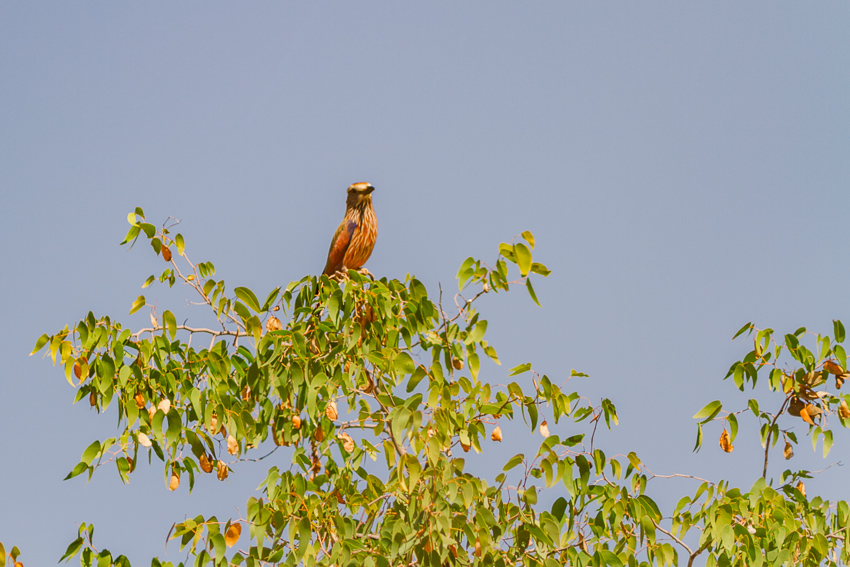
  • Purple and Lilac-breasted Rollers
  • Sunbirds
  • Weavers
  • Bulbuls

The Rufous-tailed Palm-Thrush is particularly special around Epupa. It is a permanent resident in the area, and the palms along the Kunene provide exactly the kind of habitat that makes this beautiful bird one of the local highlights.

And then there are the surprises.

In May 2025, an Angola Cave-Chat was spotted in a nearby gorge towards the Baynes Mountains, demonstrating just how interesting the area can be for birders prepared to explore beyond the river.

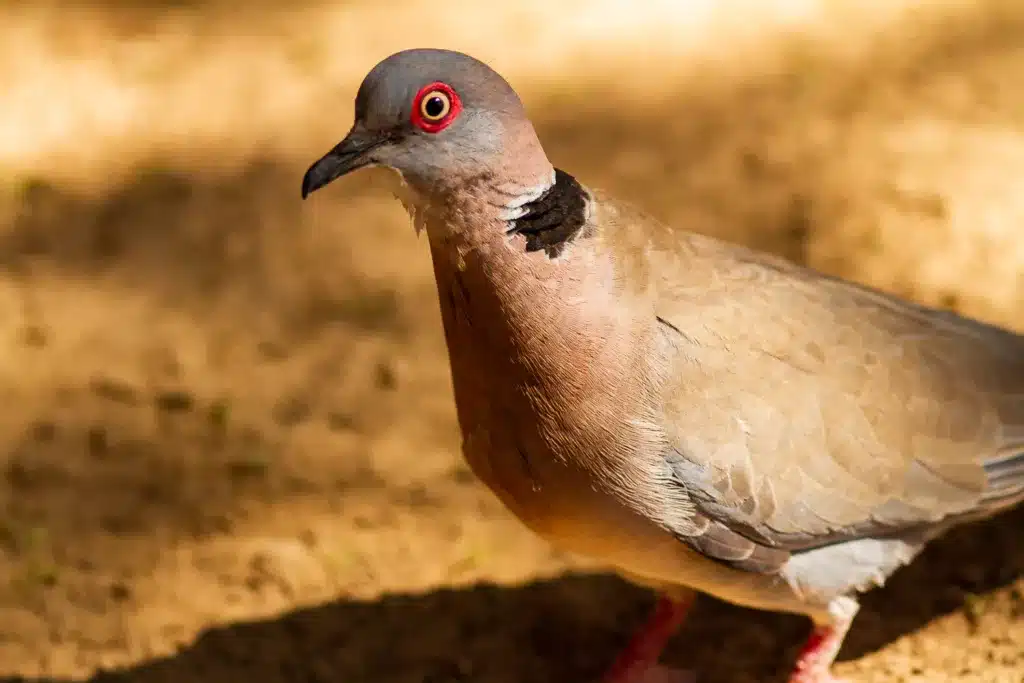
Red-eyed dove

1. The Kunene River creates a birding oasis

The biggest reason to bring your binoculars to Epupa is simple:

Water attracts life.

The Kunene is a perennial river flowing through one of the driest regions of Namibia. Along its banks you find palms, trees, reeds and other vegetation that provide food, shelter and nesting opportunities.

For bird photographers, the river is particularly rewarding because birds are often easier to observe around water.

Early mornings can be magical.

The temperatures are cooler, the river is quiet and the first birds begin moving through the vegetation. The soft morning light is also considerably kinder to a camera than the harsh midday Namibian sun.

Rosy-faced lovebird

2. The landscape creates different birding habitats

Epupa is not just about the river.

The surrounding landscape includes rocky hills, dry valleys, palm-lined riverbanks and gorges. Each habitat brings its own possibilities.

This is one of the reasons a guided birding outing can be so useful.

Rather than staying in one place and hoping something flies past, you can explore different environments and increase your chances of finding species associated with each habitat.

For serious bird photographers, this also means more opportunities for different backgrounds and photographic conditions.

A bird perched against a palm is one photograph.

A kingfisher beside the river is another.

A hornbill silhouetted against the Kaokoland mountains is something else entirely.

3. Epupa is particularly interesting for bird photographers

You don’t have to be a dedicated twitcher to enjoy birding in Epupa.

In fact, you don’t even need to know the difference between a bulbul and a bee-eater when you arrive.

The combination of birds and landscape makes Epupa interesting for photographers who simply enjoy wildlife.

Here, you aren’t photographing birds against a generic green background.

You might capture a bird with the Kunene River behind it, a palm tree framing the image, or the dramatic mountains of Kaokoland forming the backdrop.

That gives your photographs a strong sense of place.

And for anyone who travels with a long lens, Epupa offers plenty to point it at.

Grey Heron

4. You can explore with a local guide

One of the easiest ways to make the most of the birdlife is to explore with someone who knows the area.

At Epupa Falls Lodge, our guides can take guests out on guided walks through the riverine environment and surrounding landscape.

For dedicated birders, we can arrange a birding experience tailored to your interests.

This matters in a place like Epupa.

Knowing where to look is often half the battle.

A guide who knows the river, the surrounding vegetation and the local birdlife can help you identify calls, locate birds and understand what you are seeing rather than simply pointing a camera at anything with wings.

5. You get the birds and the landscape

You don’t have to be a dedicated twitcher to enjoy birding in Epupa.

In fact, you don’t even need to know the difference between a bulbul and a bee-eater whe

This might be the best reason of all.

Even if the birds decide to have a particularly Namibia-style day and hide from you, you have not wasted your morning.

You are still in Epupa Falls.

The Kunene River is flowing past.

The waterfalls are thundering through the gorge.

Baobabs and Makalani palms punctuate the landscape.

The mountains stretch towards Angola.

And somewhere in all of that, there is probably a bird calling that you haven’t identified yet.

That combination is what makes birding in Epupa so enjoyable.

It is not simply about ticking species off a list.

It is about experiencing a remarkable landscape through the birds that live there.

n you arrive.

The combination of birds and landscape makes Epupa interesting for photographers who simply enjoy wildlife.

Here, you aren’t photographing birds against a generic green background.

You might capture a bird with the Kunene River behind it, a palm tree framing the image, or the dramatic mountains of Kaokoland forming the backdrop.

That gives your photographs a strong sense of place.

And for anyone who travels with a long lens, Epupa offers plenty to point it at.
What is the best time for birding in Epupa Falls?

Birding is possible throughout the year, but seasonal changes can influence which species you see and how active the birds are.

The warmer months can bring increased bird activity and summer visitors, while the cooler, drier months are often more comfortable for walking and spending time outdoors.

For photographers, early morning remains one of the best times of day regardless of the season.

Birds are generally more active, temperatures are more pleasant and the light is softer.

And there is another advantage.

You get to watch Epupa wake up.

A birding trip to Epupa falls

If birding is an important part of your Namibia itinerary, don’t think of Epupa as simply a waterfall stop.

Give it time.

The area rewards slow travel.

Spend a morning along the Kunene River. Explore the surrounding hills. Take a guided walk. Watch the palms. Listen for calls.

And leave some space in your itinerary for the unexpected.

Because in Epupa, the best bird sighting may not be the one you arrived hoping to find.

It may be the one that suddenly appears above your head.

Stay on the kunene river

Epupa Falls Lodge is situated directly on the Kunene River, placing you in the heart of the landscape that makes birding in Epupa so rewarding.

From the lodge, you can explore the river, waterfalls and surrounding valley, with guided experiences available for guests who want to discover more of the area.

And after a morning spent looking for birds?

There are few better places to sit than beside the river, binoculars down, camera beside you, watching the landscape change as the day unfolds.

Epupa Falls when to visit
epupa road conditions
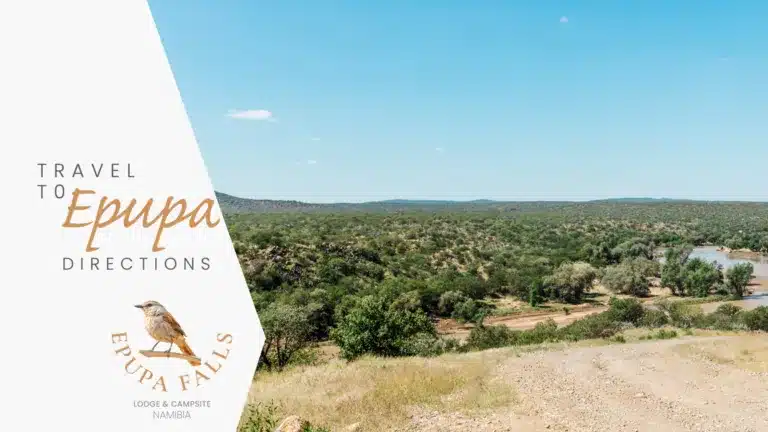
travel to epupa travel directions