There is a slightly inconvenient answer to the question “When is the best time to visit Epupa Falls?”
It depends.
If you want cooler temperatures and easier travelling, one season wins.
If you want the landscape green and the waterfalls dramatic, another might be more tempting.
If you’re a photographer hoping to catch the Kunene in full flow, you need to be a little more flexible.
And if you are looking for birds, the answer changes again.
That is part of the charm of Epupa.
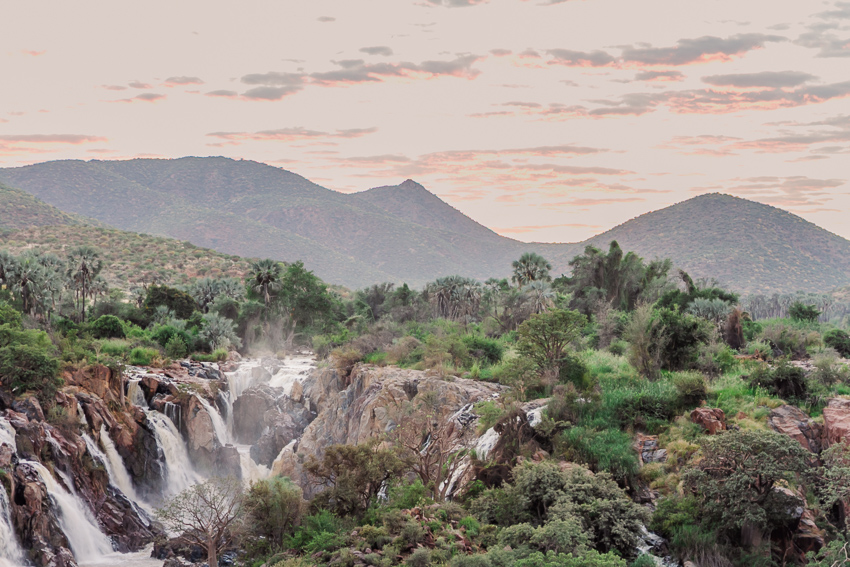
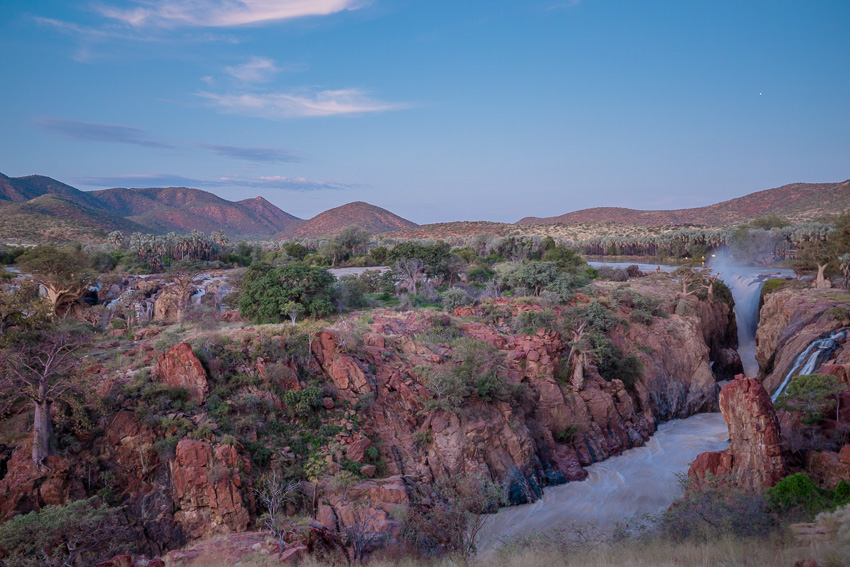
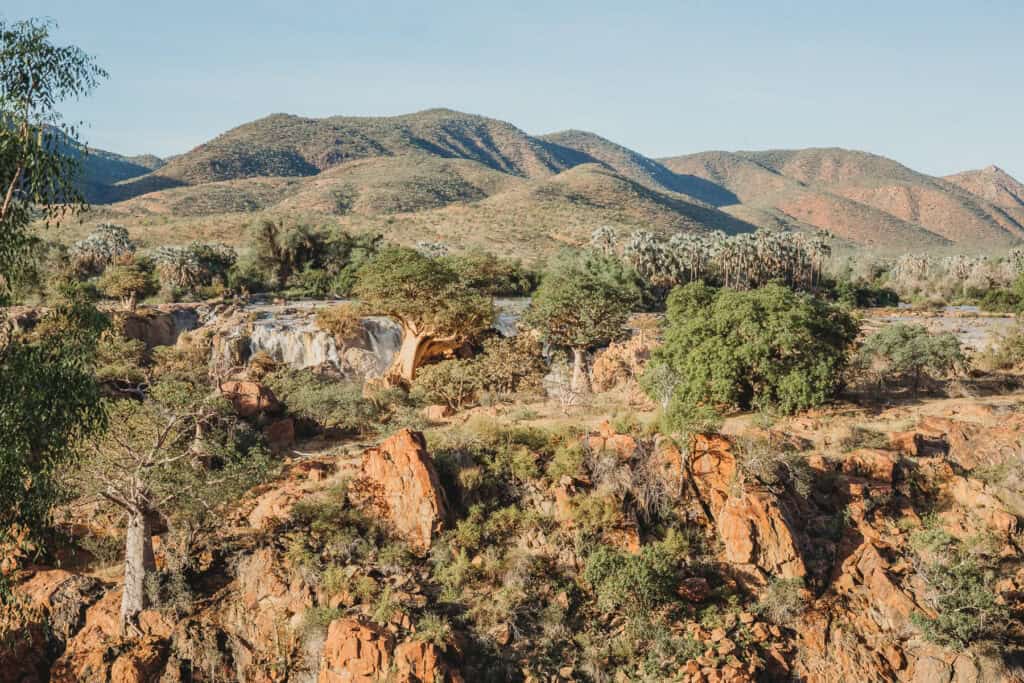
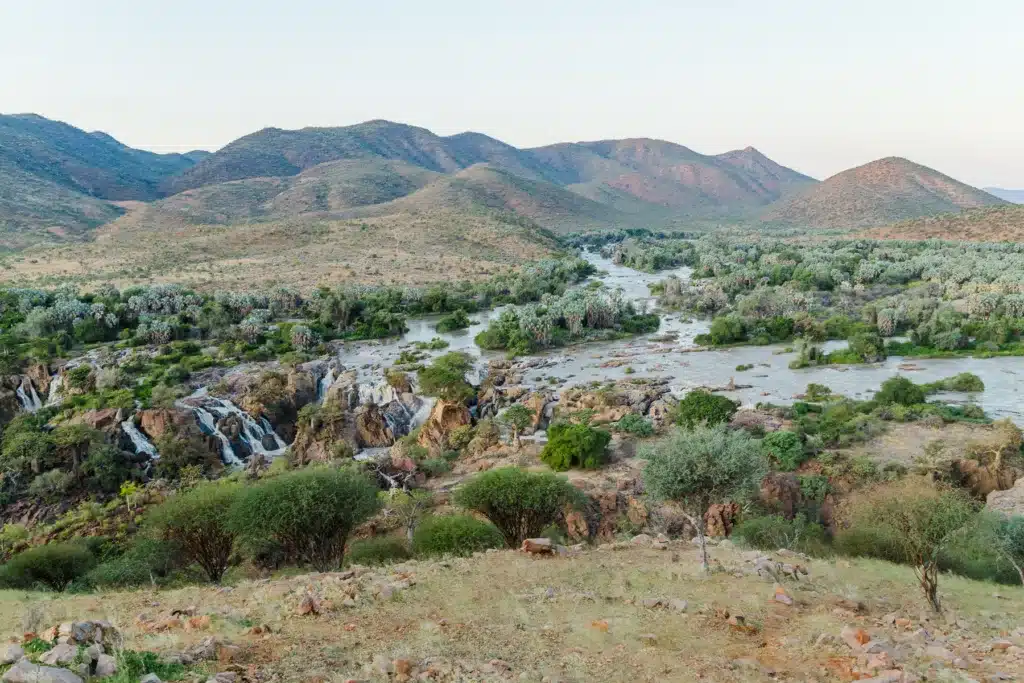
This is not a destination where the landscape looks exactly the same twelve months of the year. The Kunene River, waterfalls, vegetation, temperatures and surrounding mountains all change with the seasons, giving you a slightly different Epupa every time you visit.
So rather than declaring one month the best, here’s what you can expect throughout the year.
To understand when to visit Epupa Falls, you need to understand the river.
The Kunene River begins in Angola and eventually forms the border between Namibia and Angola. Only a relatively small section of its catchment lies within Namibia, which means that what happens upstream can have a considerable effect on what you see at Epupa.
Rainfall in the Angolan highlands can eventually make its way downstream, increasing the flow of the Kunene and transforming the falls.
But there is a catch.
You cannot reliably predict exactly when the falls will be at their fullest.
Rainfall, water levels and releases from dams upstream all influence the timing. The journey from rainfall in Angola to increased flow at Epupa can also take time. The lodge has previously documented how difficult it can be to predict the arrival of these higher waters.
So if your dream is to see Epupa roaring at maximum volume, don’t book your entire trip around a particular date expecting nature to obey the calendar.
Nature has never been especially good at calendars.
April and May are particularly interesting months for Epupa Falls.
By this time, the summer rains are generally coming to an end, temperatures become more comfortable and the landscape can still retain some of the green that arrived with the rains.
More importantly, this is the period when increased water from upstream can begin reaching Epupa.
If the preceding rainy season has been good, the difference can be spectacular.
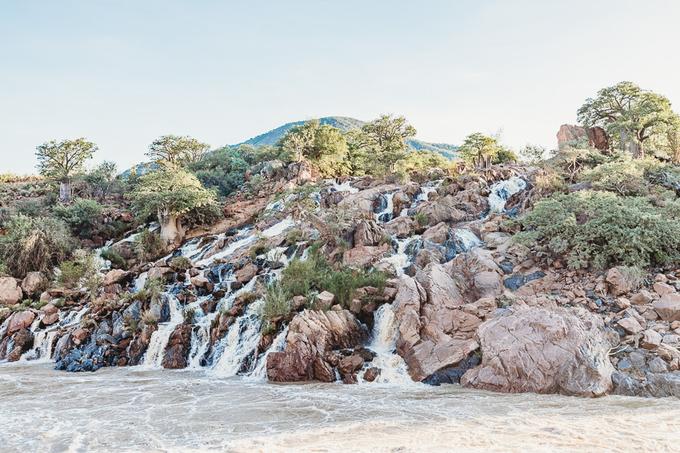
The normally divided channels of the falls can become much fuller, with brown, sediment-rich water rushing through the gorge.
It isn’t always postcard-blue.
It is often much more dramatic than that.
And the surrounding landscape can look completely different too.
Instead of the dry, golden Kaokoland many visitors expect, you may find grasses, fresh vegetation and dark clouds building over the mountains.
For photographers, April and May can be a particularly rewarding combination of landscape, light and water.
There is one important caveat: the roads can still be affected by rainfall and flash floods, so travelling at this time requires flexibility. The road itself deserves a separate conversation, which is why we’ve covered it in our Epupa Falls Road Conditions article.
If you want the combination of comfortable temperatures, generally drier conditions and easier travel, June and July are hard to beat.
The days become pleasantly warm rather than relentlessly hot, while mornings and evenings can be surprisingly cool.
The surrounding landscape becomes increasingly dry and golden, creating the classic Kaokoland scenery.
This is also a popular time for visitors.
European summer holidays begin bringing more international travellers to Namibia, and Easter and May school holidays can also create busier periods. The lodge has historically advised guests to book ahead around these periods.
For many travellers, this is the sweet spot:
If you’re visiting Epupa for the overall experience rather than one particular natural phenomenon, this is probably the safest choice.
By August and September, Epupa is properly in its dry season.
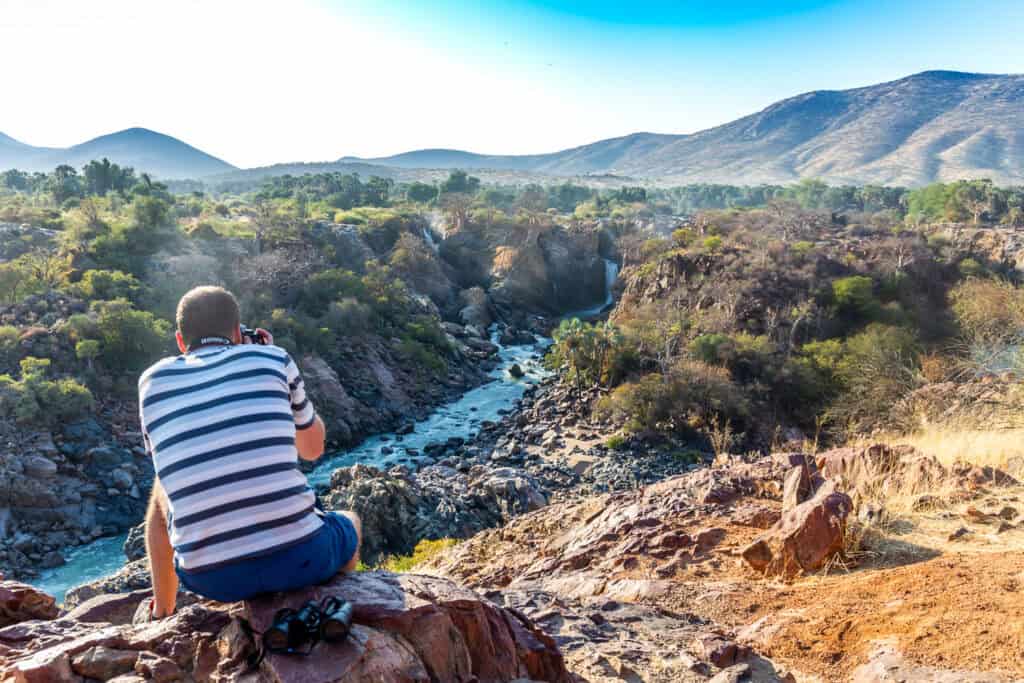
The landscape becomes increasingly stark and beautiful, with the red and ochre tones of the surrounding rocks standing out against deep blue skies.
Rain is unlikely, and this is generally a very good time for travelling through the region.
The days do become hotter, particularly as September progresses.
For photographers, though, the combination of clear skies, dramatic landscapes and strong early-morning and late-afternoon light can be wonderful.
This is also a good time to enjoy some of the activities around the lodge.
Our guided hikes are best done early in the morning, while the temperatures are still comfortable. The current activity programme also includes birding, scenic drives, cultural visits and river-based experiences.
If you prefer your adventure with a little less mud and a little more blue sky, August and September are excellent candidates.
October is where the temperatures begin to remind you that you are in northern Namibia.
The landscape is dry.
The skies are generally clear.
And the heat can become intense.
If you are comfortable travelling in hotter conditions, October can still be a rewarding month, particularly if you plan your activities around the cooler parts of the day.
Think:
early morning walk → long lazy lunch → late afternoon adventure → sunset.
Not:
let’s hike up a mountain at 14:00 because apparently we have stopped respecting ourselves.
The waterfalls will also generally have less volume than during periods of higher flow, although the Kunene remains a perennial river.
November generally marks the beginning of the summer rainfall period in the region.
Temperatures are high, and thunderstorms can develop over the surrounding mountains.
The landscape may begin responding quickly to rain, with grasses and other vegetation changing colour surprisingly fast.
This can make for beautiful photography.
But this is also when the practical side of travelling to Epupa becomes more complicated.
Rain doesn’t have to fall directly on the road to cause problems.
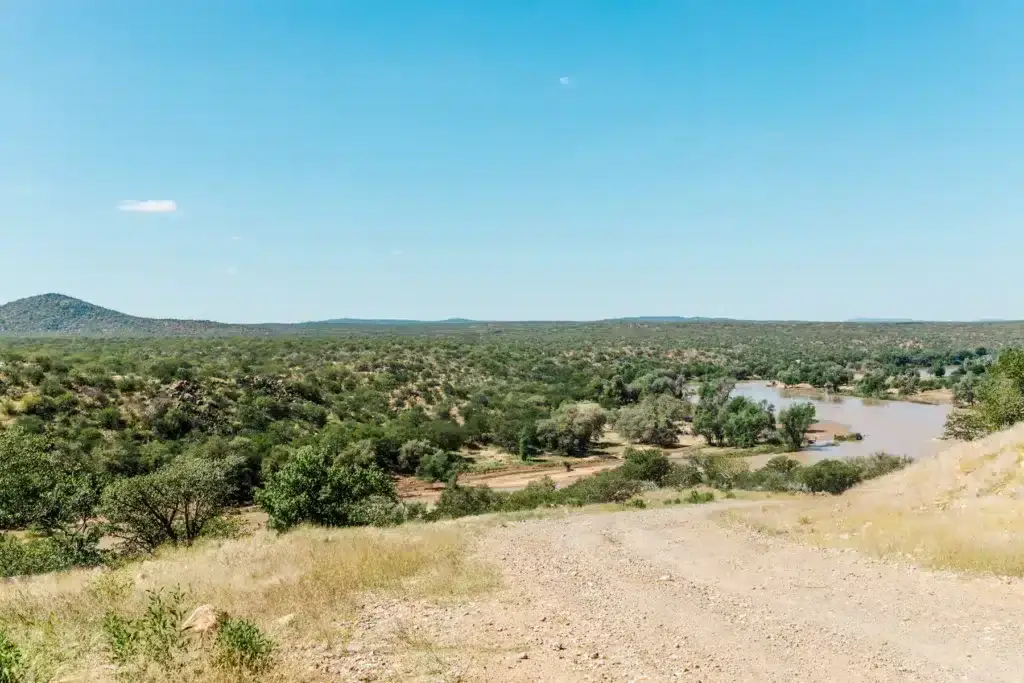
Water running off the surrounding mountains can quickly fill normally dry riverbeds and crossings. The original lodge article documents how flash floods along the roads can temporarily make sections impassable, even when rainfall at Epupa itself is limited.
This is why we recommend keeping your plans flexible if you’re travelling during the rainy season.
And why your vehicle matters.
More on that in our Epupa Falls Road Conditions guide.
February and March can be fascinating months for experienced travellers who don’t mind uncertainty.
Summer rains may have transformed the landscape, and rainfall upstream in Angola can eventually contribute to much higher flows in the Kunene.
When the timing works, the falls can be spectacular.
But this is also one of the least predictable periods for travel.
Road conditions can change quickly after heavy rain, and sections of the route may become temporarily impassable. The lodge’s own experience is that the timing of the high water is difficult to predict because it depends on rainfall upstream and water management further along the Kunene system.
So if you choose to visit during these months, don’t build an itinerary with zero wiggle room.
A flexible traveller can have an extraordinary experience.
A traveller with a non-refundable flight leaving tomorrow morning may have a considerably less entertaining story.
Here’s the short version:
| Month | What to expect | Best for |
|---|---|---|
| January | Hot, possible rain, changing road conditions | Green landscapes, adventurous travel |
| February | Hot, rainy season | Green landscapes, possible high water |
| March | Hot, rain and potentially increasing river flow | Dramatic landscapes, possible high water |
| April | Rain easing, possible arrival of higher water | Waterfalls + landscape photography |
| May | Comfortable, often beautiful, possible high water | Excellent all-round choice |
| June | Dry, cooler, good travel conditions | Excellent all-round choice |
| July | Dry, cooler, popular | Excellent all-round choice |
| August | Dry, warmer, clear skies | Hiking, photography, birding |
| September | Dry, hotting up | Photography, birding, clear skies |
| October | Hot and dry | Early/late-day activities |
| November | Hot, rains beginning | Green season, adventurous travel |
| December | Hot, possible rain | Green landscape, flexible itineraries |
May to July is probably the easiest answer for most visitors.
You have a good chance of comfortable temperatures and generally better travelling conditions, while April and May may still offer the possibility of increased river flow following the rainy season.
August and September are also excellent if you prefer dry weather, clear skies and don’t mind increasing temperatures.
If your priority is seeing Epupa Falls in particularly high flow, however, don’t choose a date purely from a calendar. The timing depends on rainfall and water movement upstream in Angola, so flexibility is your friend.
Epupa is an excellent destination for birders throughout the year, but the changing seasons alter the experience.
The Kunene River creates a permanent water source and a surprising variety of habitats in an otherwise dry region. Around 240 bird species have been recorded in the area, and the lodge offers dedicated birding experiences by river, on foot and into the surrounding mountains.
For bird photographers, early mornings are particularly rewarding.
The temperatures are cooler, birds are active, and the light is soft.
If birding is one of the main reasons for your visit, tell us when you enquire. A dedicated birding experience can be arranged around the species and habitats you’re hoping to explore.
Read more: Birding in Epupa Falls
This is where we deliberately stop.
Because “When should I visit?” and “Can I get there?” are two different questions.
The rainy season can affect road conditions dramatically, while the dry season generally offers easier travelling.
But the exact state of the road depends on recent rainfall, maintenance and local conditions. Sections can change after storms, particularly around river crossings.
For the practical details of what to expect behind the steering wheel, read:
Epupa Falls Road Conditions: What You Need to Know Before You Drive
And once you’ve decided when to go and what vehicle you’ll take:
That is the order we’d recommend planning your journey.
If you’re driving all the way to Epupa, give yourself time to enjoy it.
This is not somewhere we’d recommend rushing into for a few hours, photographing the falls and immediately turning around.
Stay at least two nights if your itinerary allows.
That gives you:
Epupa rewards travellers who stop trying to squeeze it into a timetable.
The river isn’t going anywhere.
Well, technically it is.
It’s just taking its time getting to the Atlantic.
There isn’t a single perfect month.
May to July is our practical recommendation for most first-time visitors.
April and May can be particularly rewarding if you’re hoping for greener landscapes and stronger water flow.
August and September offer dry conditions and beautiful clear skies.
And the rainy season can produce some spectacular scenery, but requires flexibility and a willingness to accept that the road may occasionally have other ideas.
Whichever season you choose, Epupa is about more than the waterfall.
It is the Kunene River.
The mountains.
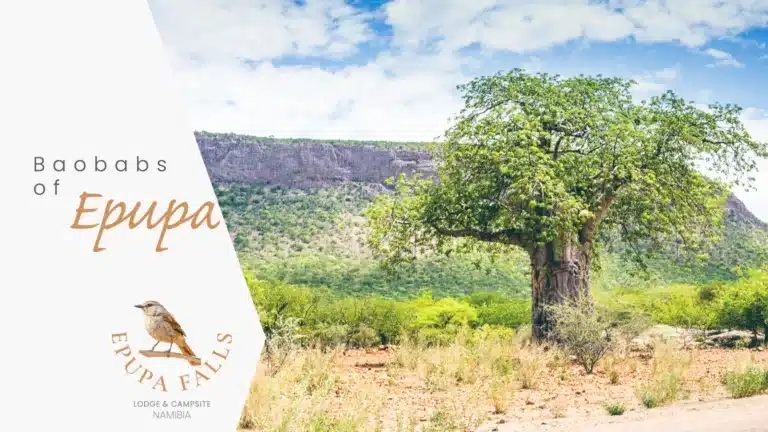
The baobabs.
The Makalani palms.
The birdlife.
The Himba communities who call this region home.
And the wonderful feeling that you have travelled properly off the beaten track.
Once you’ve chosen your dates, the next two questions are usually:
What are the roads actually like?
Read our guide to Epupa Falls Road Conditions.
How do I get there?
Follow our detailed Directions to Epupa Falls from Opuwo.
And if you haven’t yet decided whether Epupa deserves a place on your Namibia itinerary, start with The Epupa Falls.
Ready to experience Epupa for yourself?
Stay on the banks of the Kunene River at Epupa Falls Lodge, just moments from the falls, and give this remarkable corner of Kaokoland the time it deserves. The lodge is family-run and offers accommodation, camping and guided activities including hiking, birding, cultural visits and river experiences.