epupa road conditions

Epupa Falls Road Conditions: What You Need to Know Before You Drive

Getting to Epupa Falls is not difficult because it is particularly far from civilisation.

It is difficult because civilisation stops being terribly interested in maintaining the road.

And that is rather the point.

Epupa sits at the end of the road in the far northwestern corner of Namibia, where the Kunene River forms the border with Angola. The journey takes you through the remote landscapes of Kaokoland, along gravel roads, through riverbeds and past small settlements where livestock and people have considerably less respect for your carefully planned arrival time than Google Maps does.

The road is part of the experience.

But that doesn’t mean you should approach it unprepared.

Here’s what you need to know before driving to Epupa Falls.

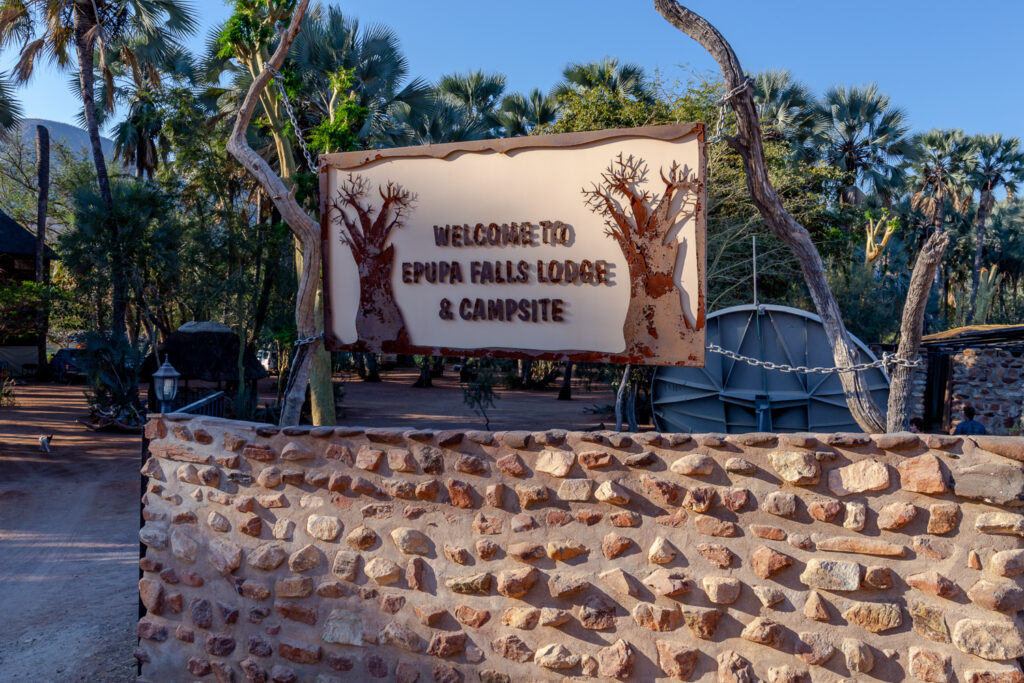
epupa falls lodge and campsite entrance gate

Is the road to Epupa Falls difficult?

The short answer is:

It depends on the season, the route and the vehicle you’re driving.

In dry conditions, the main routes to Epupa are generally manageable for a properly equipped 4×4 with reasonable ground clearance.

The current road from Opuwo to Epupa via the C43 is approximately 199 km in total, with the route passing through Okongwati before continuing north towards the Epupa Valley. The final approach becomes more winding as you descend towards the Kunene River. 

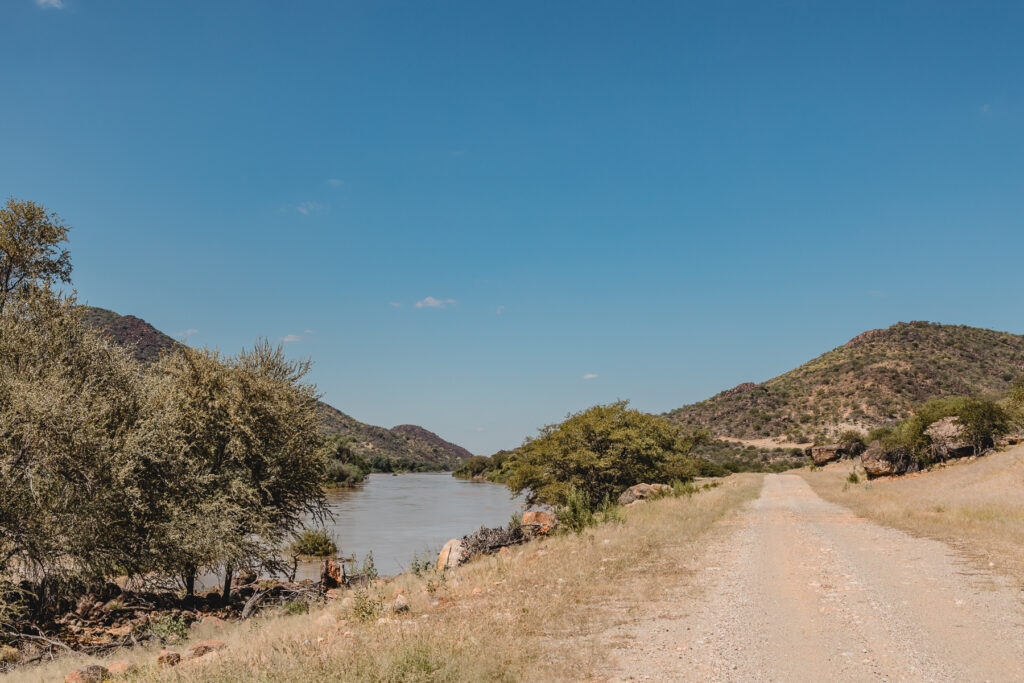
From Ruacana, the D3700 follows the Kunene River westwards towards Epupa. It is an exceptionally scenic route, but conditions can change quickly after rain, particularly around river crossings. 

The important thing is not to think of the road as one continuous obstacle.

Most of the journey is simply gravel-road driving.

The tricky bits are the bits that can change.

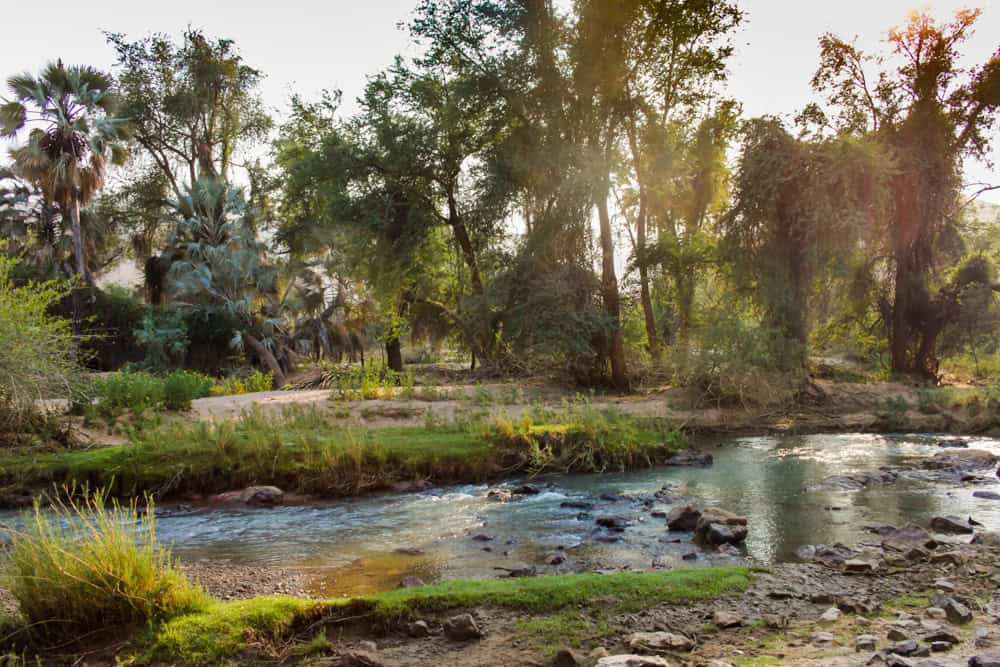
Kunene River walking activity at epupa falls lodge

Opuwo to Epupa: the C43

For most travellers coming from the south, Opuwo is the logical final resupply point before Epupa.

From Opuwo, you take the C43 north towards Epupa.

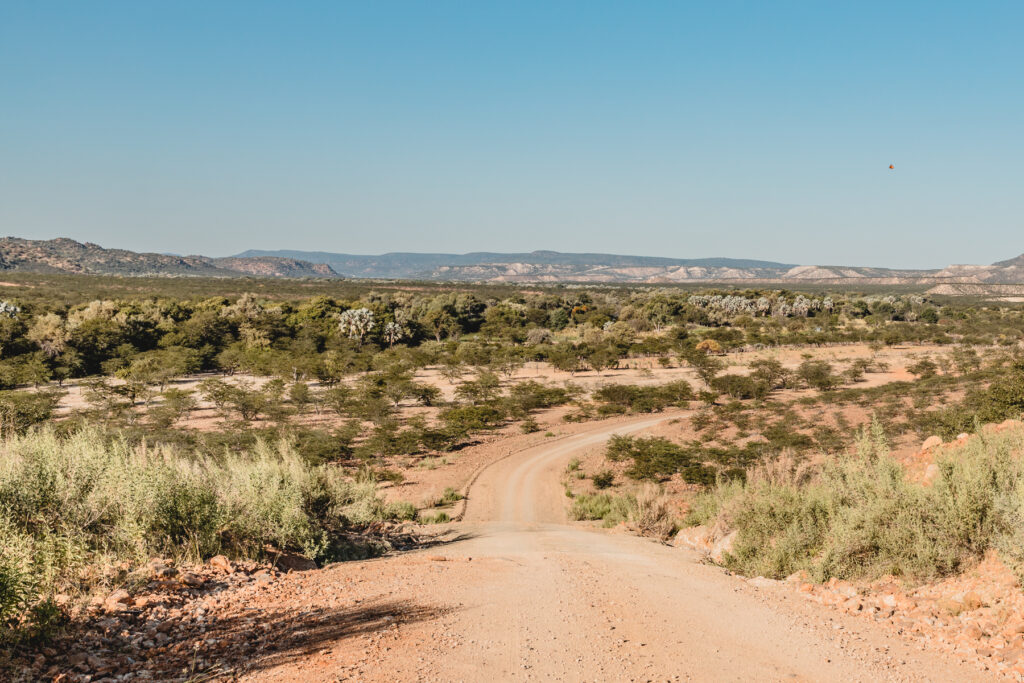
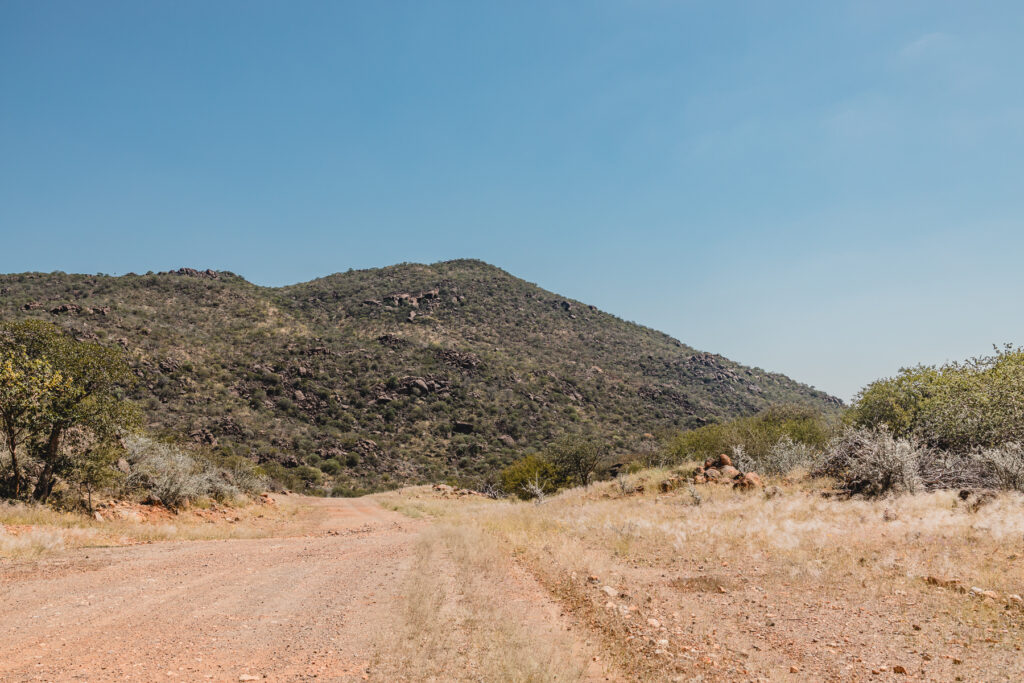
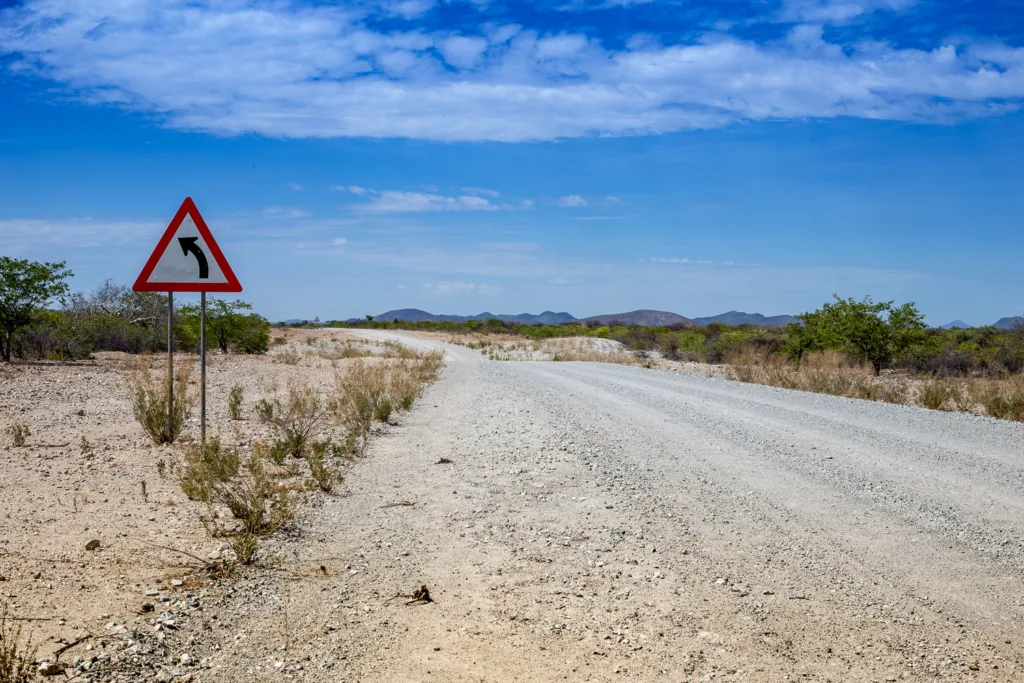
The road is gravel, and conditions vary depending on recent weather, traffic and grading.

You will encounter:

  • corrugations
  • loose gravel
  • occasional rocky sections
  • dips and drainage channels
  • riverbeds and crossings
  • animals and livestock near settlements
  • pedestrians
  • changing road surfaces as you approach the Epupa Valley

The current lodge directions recommend allowing approximately four hours from Opuwo, although a driver familiar with the road may do it more quickly.

Our advice?

Don’t make the drive a race.

You have come all this way to see Epupa.

There is very little point in arriving twenty minutes earlier with your fillings rattling around in the glove compartment.

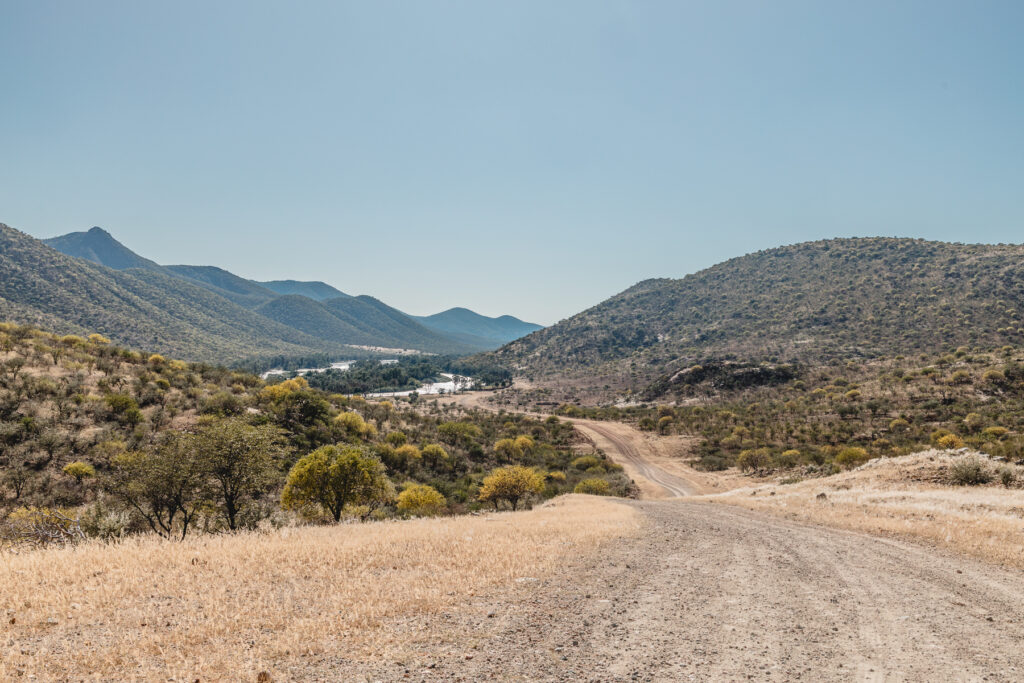
epupa falls road to ruacana

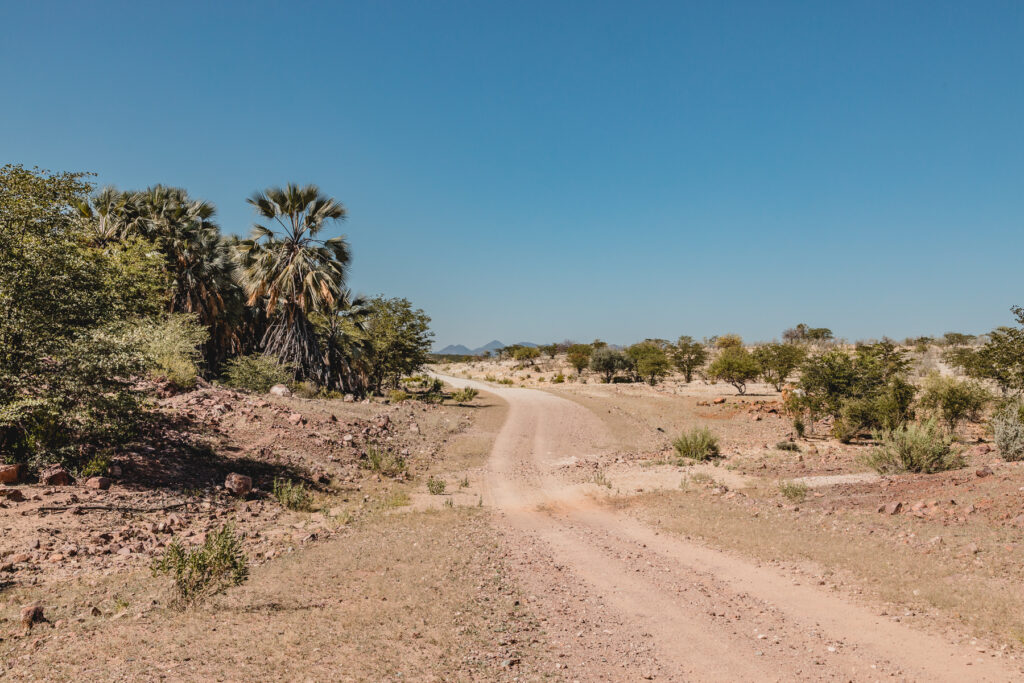
The road changes as you get closer to Epupa

One of the lovely things about the journey is that the landscape gradually gives you clues that you are getting close.

The long, relatively straight gravel roads begin to change.

The road winds through the landscape.

The surrounding mountains become more dramatic.

Baobabs begin appearing.

Makalani palms become more frequent.

And eventually you start descending towards the Kunene River and the Epupa Valley.

The final approach deserves particular care.

There are bends, dips and sections where visibility is limited. Once you’re close to the valley, slow down.

There will be people.

There will be animals.

There may be children walking alongside the road.

And there is absolutely no prize for being the first person into Epupa.

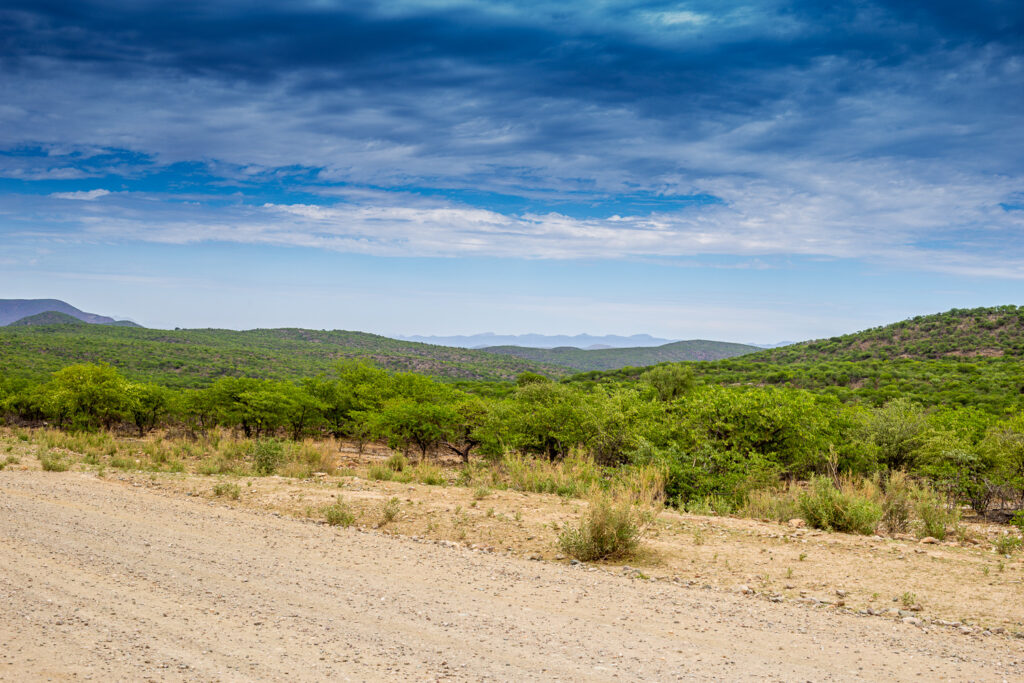
road between epupa and opuwo

Do you need a 4×4 to drive to Epupa Falls?

For a self-drive trip to Epupa, we strongly recommend a 4×4 with reasonable ground clearance.

The current lodge guidance specifically describes the D3700 as manageable in a 4×4 with reasonable clearance when conditions are good. 

Why?

Because ground clearance matters when the road gets rough.

And four-wheel drive gives you additional traction when the surface becomes loose, muddy or uneven.

But there’s an important distinction:

Having a 4×4 doesn’t make you invincible.

A 4×4 cannot magically turn a flooded river into a road.

It cannot make deep mud disappear.

And it cannot compensate for driving too fast on corrugated gravel.

In difficult conditions, experience and judgement matter just as much as the badge on the back of your vehicle.

What about 2WD vehicles?

We would not recommend planning a trip to Epupa around a normal low-clearance 2WD vehicle.

In good, dry conditions, some sections may be perfectly easy to drive.

That does not mean the entire journey will remain easy.

The problem with remote travel is that you need to plan for the conditions you might encounter, not only the conditions you hope to encounter.

A road that is perfectly manageable in a high-clearance vehicle after several dry weeks can become an entirely different proposition after heavy rain.

If you’re hiring a vehicle specifically for a Kaokoland trip, tell the rental company where you’re going.

Don’t simply book the cheapest SUV and assume “SUV” means 4×4.

Check.

Corrugations: the gravel-road enemy

If you’ve never driven a heavily corrugated gravel road before, you’re about to discover a new relationship with your suspension.

Corrugations are repeated ridges across the road surface, usually created and worsened by traffic travelling too fast on gravel.

They can make the road feel like a giant washboard.

And when traffic increases during the popular dry-season travel months, corrugations can become significantly worse. The lodge’s earlier road report noted that traffic and incorrect tyre pressures contribute to worsening corrugation.

The answer isn’t simply to drive faster until you find the magical speed where the vehicle floats over them.

Slow down.

Find a speed at which the vehicle remains controlled and comfortable.

And look after your tyres.

road between epupa and opuwo

Check your tyre pressure

Tyre pressure matters enormously on gravel.

Your rental company should be able to advise you on the appropriate pressures for your vehicle and tyres.

The lodge has traditionally advised reducing tyre pressure when travelling on gravel roads, particularly when corrugations are severe.

Don’t simply copy somebody else’s tyre-pressure number from a Namibia Facebook group.

The correct pressure depends on:

  • your vehicle
  • your tyres
  • vehicle load
  • road conditions
  • speed

If you’re unsure, ask your rental company before leaving.

And make sure you know how to change a tyre before you need to change one.

Preferably not 80 km from anywhere.

At 38°C.

With the wind blowing.

epupa falls road to ruacana

River crossings are where things get serious

This is the section I would pay the most attention to.

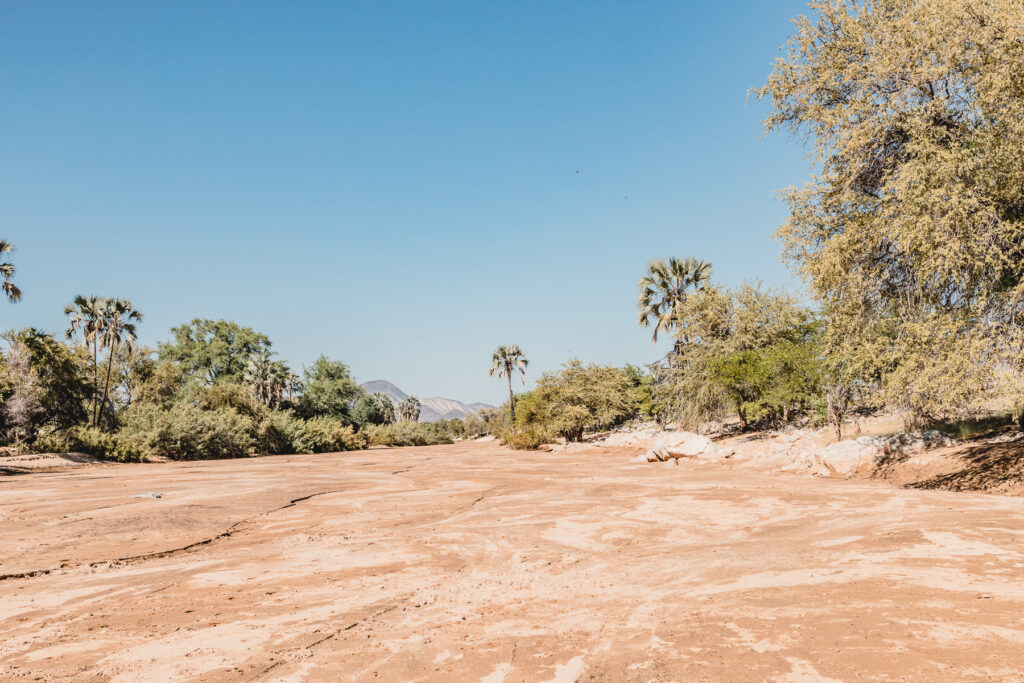
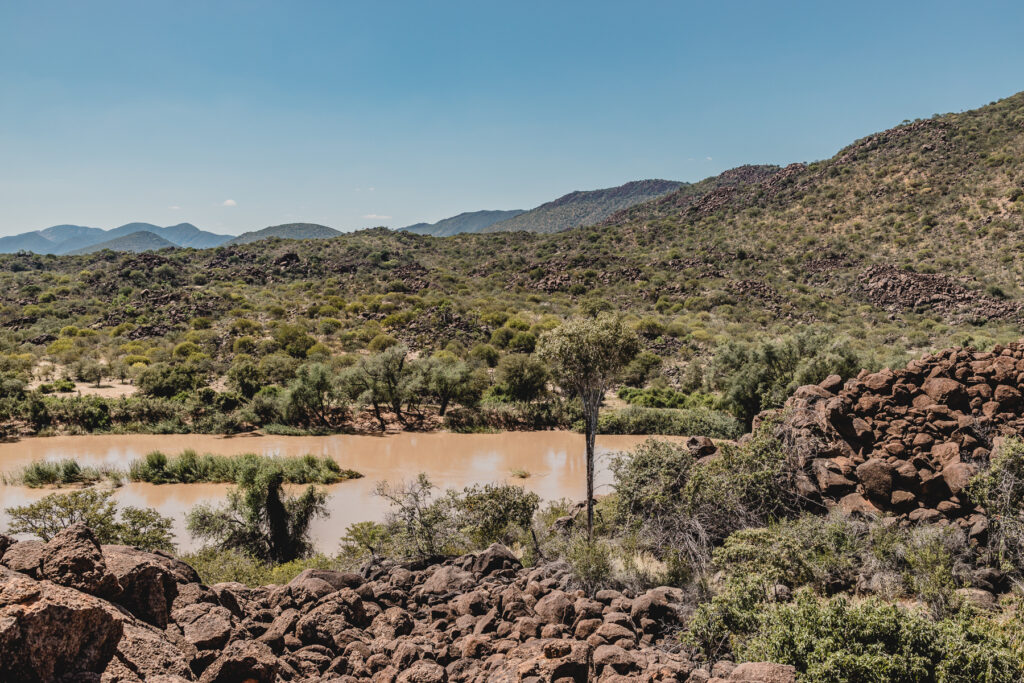
There are riverbeds and seasonal crossings along the routes to Epupa.

In dry conditions, many of these are simply part of the road.

After rain, they can become something else entirely.

And water can arrive surprisingly quickly.

A riverbed that was dry when you left breakfast may not be dry when you return.

The current lodge guidance is very clear:

If a river is flowing, don’t drive through it.

Wait for the water to subside, or turn around.

We also recommend checking crossings on foot before attempting them when conditions are wet. 

Never assume that because another vehicle crossed, it is safe for you to cross.

Water levels can rise.

The riverbed can shift.

The bottom may be softer than it looks.

And the vehicle in front of you may have rather more ground clearance than your rental vehicle.

road between epupa and opuwo

What happens after heavy rain?

This is when the road to Epupa can become genuinely challenging.

Kaokoland is a dry region, but dry does not mean that water is harmless.

Heavy rain can produce flash floods, particularly in normally dry riverbeds and drainage channels.

And the rain does not necessarily need to fall directly where you are.

Water from upstream areas can travel into the riverbeds and crossings later.

The lodge specifically warns that during the rainy season, flash floods can happen quickly even though rainfall at Epupa itself may be limited.

If heavy rain is forecast or has recently occurred:

Ask locally before you leave.

This is one situation where local knowledge is worth considerably more than a cheerful green line on Google Maps.

road between epupa and opuwo

The D3700 from Ruacana

The alternative route from the east approaches Epupa along the D3700 from Ruacana.

It is one of the most scenic ways to reach Epupa, following the Kunene River for much of the route.

The landscape is spectacular.

It is also a route where conditions can be affected by flooding.

The D3700 may become impassable during periods of high water, particularly when the Kunene is in flood. The lodge advises checking that the road is dry and driveable before committing to the route.

If conditions are good, take your time.

Stop at Swartbooisdrift.

Look towards the Zebra Mountains.

Watch for wildlife and livestock.

And remember that this is not simply a road connecting two points on a map.

It is one of the most beautiful drives in northern Namibia.

road between epupa and opuwo

What should you carry?

When you’re travelling this remotely, self-sufficiency matters.

Before leaving Opuwo or Ruacana, make sure you have:

Fuel

Fill up.

Don’t assume you’ll find reliable fuel between major points.

Water

Carry considerably more drinking water than you think you’ll need.

Food and snacks

Especially if you’re travelling outside the main tourist season or expect a long driving day.

Spare tyres

Ideally, know the condition of your spare tyres and make sure the vehicle actually has the necessary equipment to change one.

Basic recovery equipment

If you’re travelling independently into remote areas, appropriate recovery equipment is sensible.

Communication

Mobile coverage is not something to take for granted throughout Kaokoland.

Save the lodge’s contact details before leaving.

+264 81 250 8225 on WhatsApp for reservations and general contact, with a separate emergency number for lodge emergencies.

Fill up before you leave Opuwo

This deserves its own heading because it is an easy mistake to make.

Opuwo is your main opportunity to stock up before heading north.

The current lodge directions specifically recommend planning your fuel and supplies around Opuwo and note that there is also a fuel opportunity near the route before the Opuwo turn-off.

Don’t leave town thinking:

“We’ll probably find something along the way.”

This is Kaokoland.

“Probably” is not a fuel strategy.

What should you check before leaving?

Road conditions can change.

So before driving to Epupa, ask someone local about:

  • recent rainfall
  • flooded crossings
  • current road conditions
  • whether the D3700 is open
  • whether the C43 has any problem areas
  • fuel availability
  • current weather upstream
  • any temporary closures or roadworks

If you’re staying with us, contact the lodge before you leave your previous stop.

We would rather answer a quick WhatsApp question than have you discover a flooded river the hard way.

road between epupa and opuwo

When is the road easiest?

In general, the dry season offers the most predictable driving conditions.

But even in dry months, gravel roads can become heavily corrugated and dusty, particularly when traffic increases.

During the rainy season, conditions can change quickly.

That doesn’t mean you cannot travel to Epupa during the rainy season.

It means you need to be flexible.

For a proper explanation of how the different seasons affect the entire Epupa experience, including the falls, weather and landscape, read our guide to the Best Time to Visit Epupa Falls.

road between epupa and opuwo

How long should you allow for the drive?

From Opuwo to Epupa, allow around four hours in normal conditions.

The current lodge information gives approximately four hours, while the older local guide notes that a driver familiar with the route can do it faster. 

We recommend using the four-hour figure.

And if you stop for photographs, lunch, wildlife, people, scenery or the occasional moment of staring at the landscape wondering how Namibia managed to hide this place from everyone, you’ll probably need longer.

From Ruacana, allow considerably more time than a simple map calculation might suggest if you want to enjoy the D3700.

The journey is part of the experience.

opuwo to ruacana road

A note about Google Maps

Use your GPS.

But don’t outsource all your judgement to it.

A navigation app can tell you where a road should be.

It cannot tell you that the road has just disappeared under a river.

That’s where local information wins.

road between epupa and opuwo

Is driving to Epupa worth it?

Absolutely.

The road is part of what makes Epupa special.

You leave the more familiar routes of Namibia behind and gradually enter a landscape that feels increasingly remote.

The traffic thins.

The settlements become smaller.

The mountains become more dramatic.

Baobabs begin appearing.

Then the Makalani palms.

And finally the Kunene River.

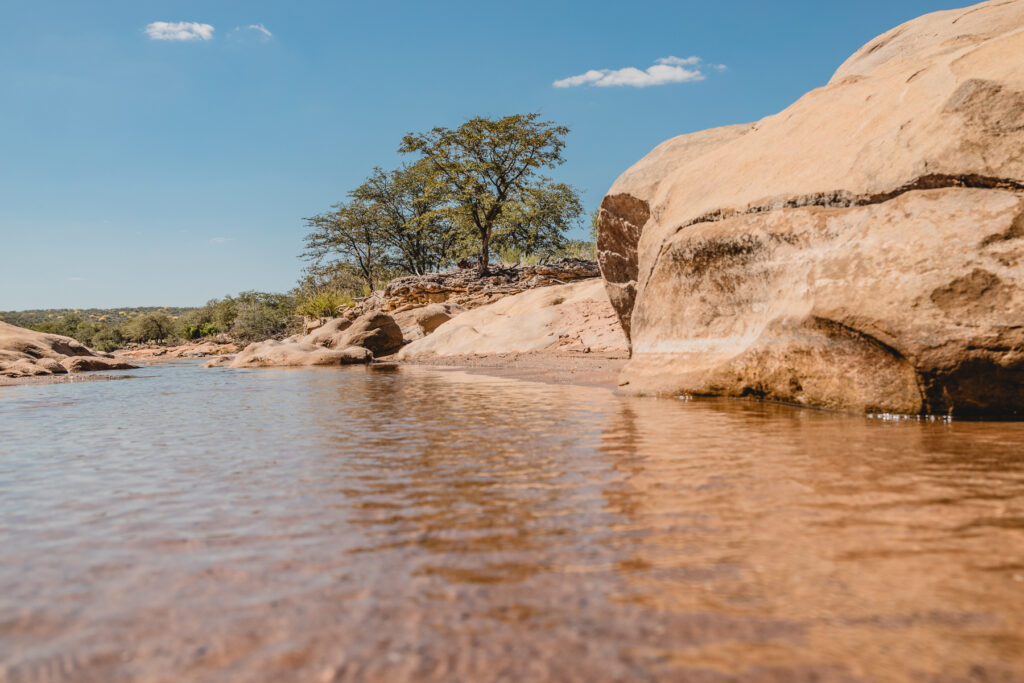
After kilometres of gravel, dust and open landscape, the sight of water winding through the valley feels almost improbable.

And then you hear the falls.

That is when you know you made the right decision.

road between epupa and opuwo

Planning your drive to Epupa Falls?

For guests who want to understand more about the landscape rather than simply photograph it, our guided afternoon walk is another wonderful option.

Walking upstream along the Kunene River, you can learn about some of the plants that have adapted to life in this dry environment, including the remarkable baobab.

These walks also give you time to slow down and notice the smaller details of Epupa.

The trees.

The rocks.

The river.

The changing light.

And the extraordinary contrast between water and desert that makes this part of Namibia so special. We’ve broken the journey into three practical guides:

Choosing when to go:
Read Best Time to Visit Epupa Falls for a month-by-month look at weather, river levels and seasonal conditions.

Understanding the road:
You’re here. Bookmark this page before you leave Opuwo.

Finding your way:
Follow our detailed Directions to Epupa Falls, including the routes from Opuwo and Ruacana and the final approach to the lodge.

Once you arrive, there is plenty to keep you busy. Explore the Epupa Falls, discover the baobabs of Epupa, spend time with the local community through a Himba cultural experience, or grab your binoculars for birding in Epupa Falls.

And then, preferably, sit beside the Kunene River and enjoy the fact that you drove all the way here.

Stay at the end of the road

Epupa Falls Lodge sits directly on the banks of the Kunene River, just moments from the falls. The lodge offers river-view chalets, family accommodation and campsites, making it an ideal base for exploring the Epupa Valley.

Planning your journey to Epupa? Contact us before you leave Opuwo. We’ll help you make sure the road ahead is as uneventful as possible.