Epupa Falls, Namibia: The Ultimate Guide

There are waterfalls you drive past.

And then there are waterfalls you drive for hours to reach.

Epupa Falls belongs firmly in the second category.

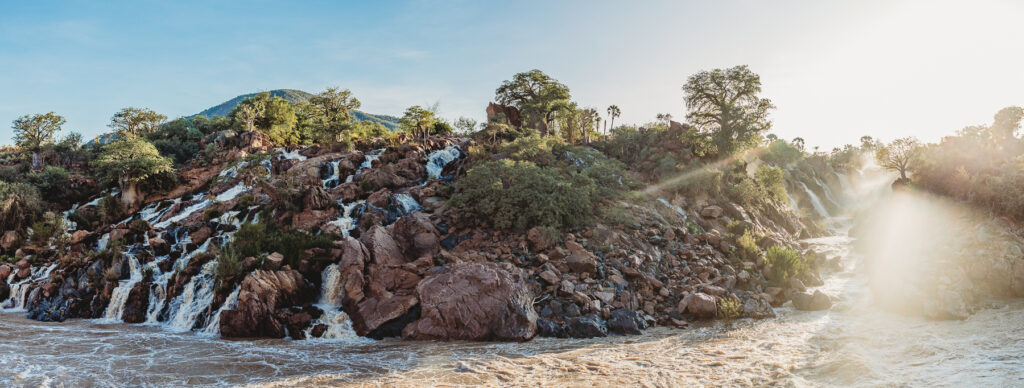
Deep in the remote landscapes of Kaokoland, in northern Namibia, the Kunene River forms the border between Namibia and Angola before tumbling through a spectacular series of waterfalls, rocky channels and deep gorges.

The landscape is extraordinary.

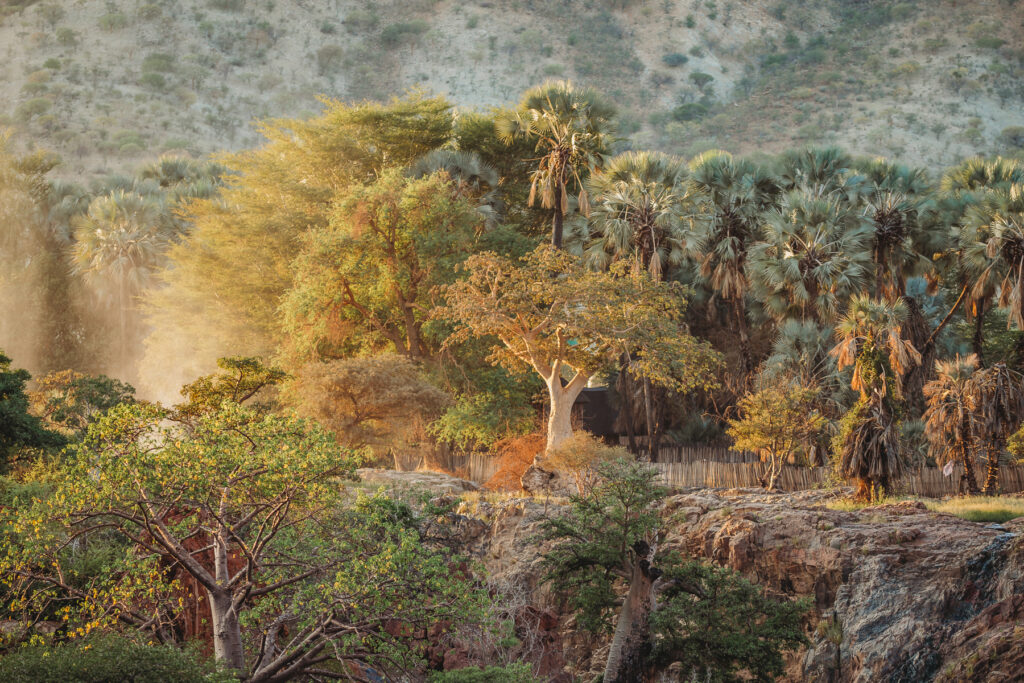
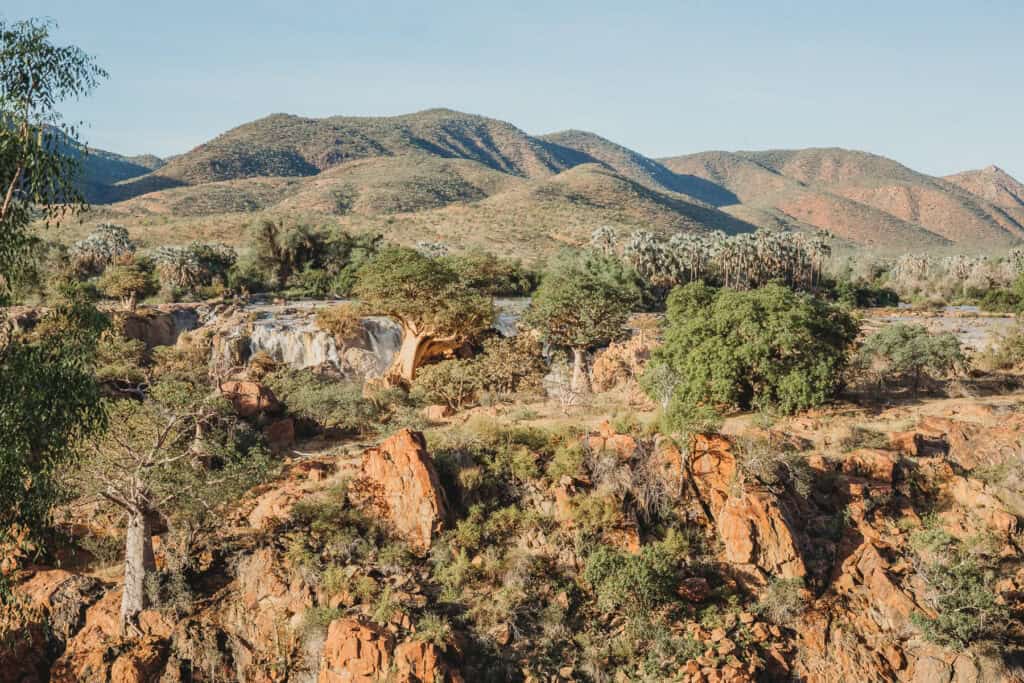
Dry mountains rise around a river lined with Makalani palms. Ancient-looking baobabs stand among the rocks. The sound of falling water carries through the valley.

And after the long drive from Opuwo, the sudden appearance of all that water in an otherwise arid landscape feels almost improbable.

This is Epupa Falls.

And it is worth the journey.

epupa falls, epupa

Where is Epupa Falls?

Epupa Falls is in the far northwestern corner of Namibia, in the Kunene Region, where the Kunene River forms part of the international border between Namibia and Angola.

The falls are approximately:

  • 121 km from Opuwo to Okongwati
  • 78 km from Okongwati to Epupa
  • around 199 km from Opuwo in total
  • approximately 5 hours from Ruacana
  • approximately 10 hours from Windhoek
  • approximately 11 hours from Swakopmund

These are approximate driving times and can vary considerably depending on road conditions, stops and weather.

There is no quick little detour here.

Epupa is deliberately remote.

And that’s precisely why it feels the way it does.

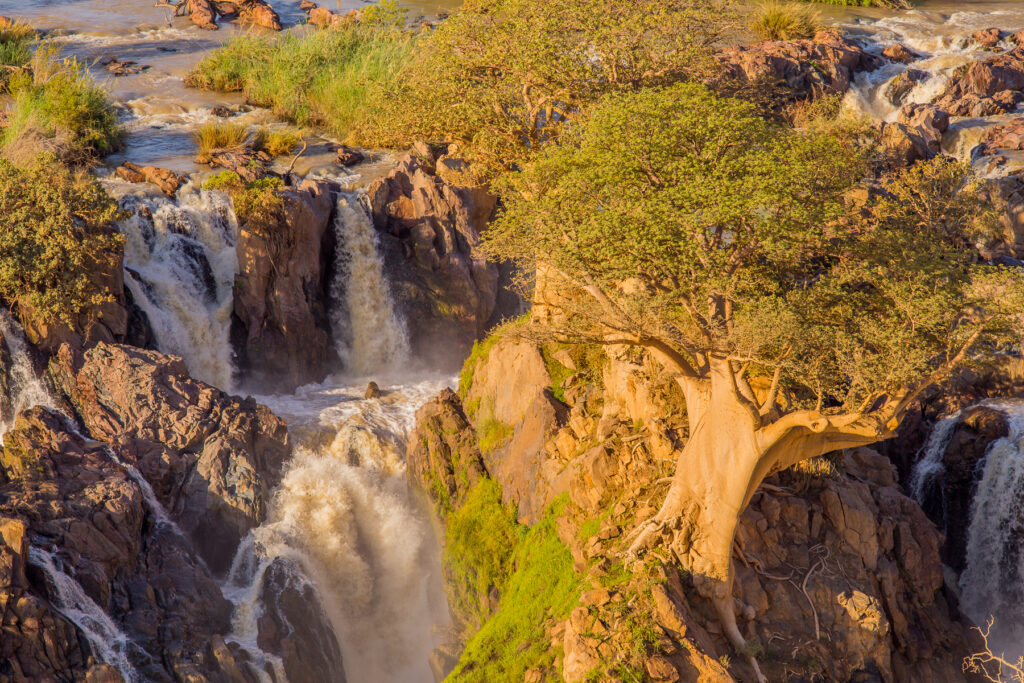
baobab above the epupa falls

What does “Epupa” mean?

The name Epupa comes from the local Ovahimba language and refers to falling water.

It is an appropriate name.

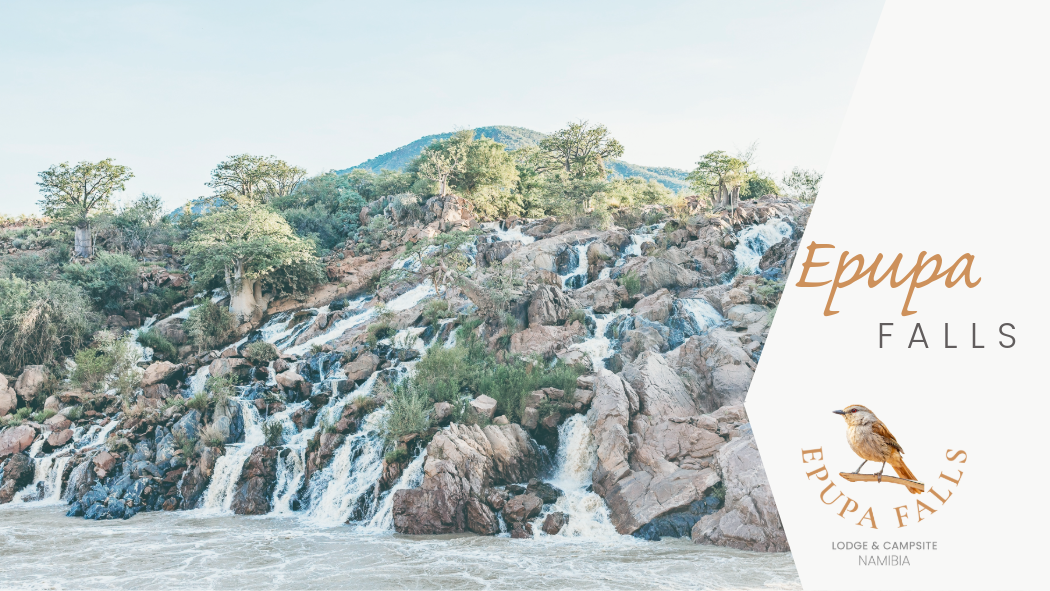
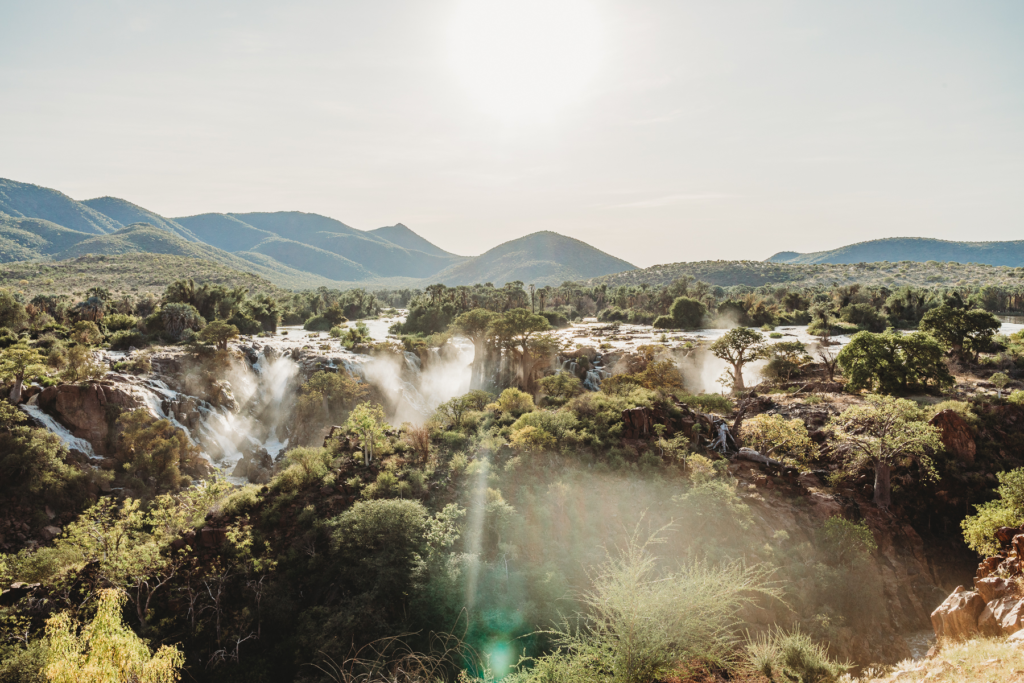
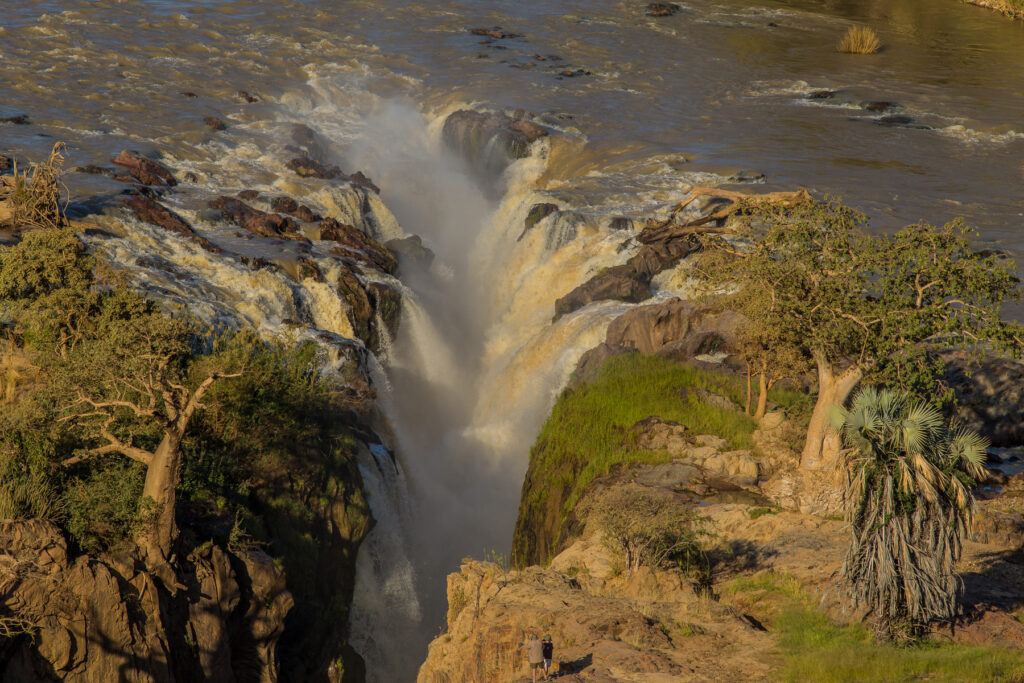
The Kunene River reaches a deep, narrow valley at Epupa, where the water tumbles over a series of waterfalls spread across approximately 1.5 kilometres.

The largest single drop is around 37 metres

But calling Epupa simply “a waterfall” doesn’t quite capture what you’re looking at.

It is a whole landscape of water.

Channels split and rejoin.

Water rushes through narrow rock passages.

Smaller cascades appear between larger drops.

Mist hangs in the air when the river is flowing strongly.

And the falls change considerably depending on the river’s flow.

Kunene River walking activity at epupa falls lodge

The Kunene River

The Kunene River is what makes Epupa so extraordinary.

This is one of Namibia’s perennial rivers, rising in the Angolan highlands before eventually forming the border between Angola and Namibia.

By the time it reaches Epupa, the river has travelled through a landscape that could hardly look more different from the lush highlands where its journey begins.

Here, the river is surrounded by dry mountains and rocky terrain.

Yet along its banks, life gathers.

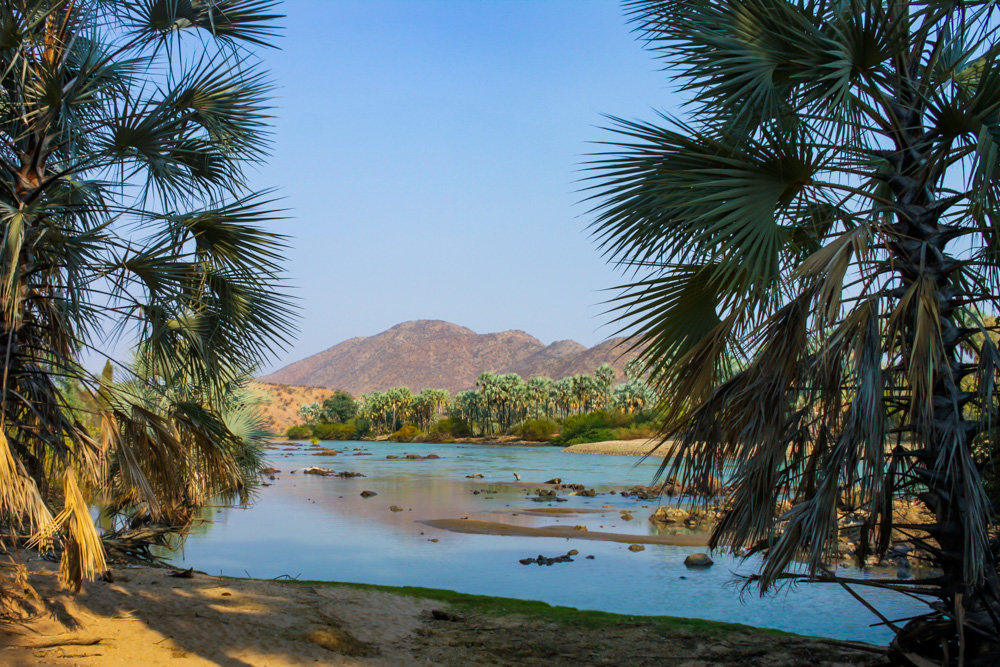
Makalani palms grow beside the water.

Birds find food and shelter.

Crocodiles inhabit parts of the river.

People and livestock depend on it.

And the river itself creates a ribbon of green through the dry landscape.

That contrast is one of the things that makes Epupa so visually striking.

epupa falls walks along kunene river

How big are the Epupa Falls?

This is where Epupa gets slightly complicated.

There isn’t one single waterfall that you can point to and say, “There it is.”

The falls are spread across approximately 1.5 km of the Kunene River, with multiple cascades and drops.

The main drop is approximately 37 metres.

Immediately before the falls, the river can be around 500 metres wide, before being funnelled into the much narrower valley and rocky channels where the water begins its descent.

The result is much more dramatic than a single vertical waterfall.

It’s a whole geological landscape shaped by the river.

Why is Epupa Falls so unusual?

Because almost everything about the landscape seems to contradict everything else.

You have:

Desert-like mountains.

A permanent river.

Palm trees.

Baobabs.

Waterfalls.

Rocky gorges.

Himba communities.

And an international border running through the river.

It’s an extraordinary collision of landscapes and cultures.

The dry Kaokoland landscape makes the Kunene feel even more dramatic. After hours of driving through dusty, rocky terrain, the river appears as a startling green ribbon cutting through the valley.

Then you notice the palms.

Then the baobabs.

Then you hear the water.

It is one of those places where the landscape doesn’t need much help from a tour guide.

epupa falls namibia

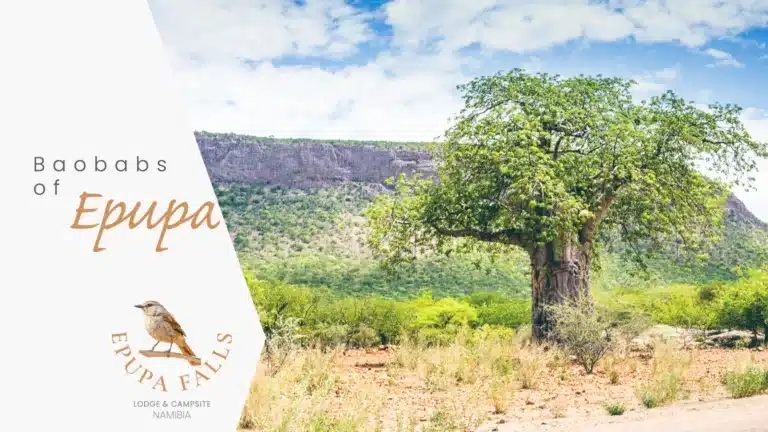
The baobabs of Epupa

The waterfalls aren’t the only giants here.

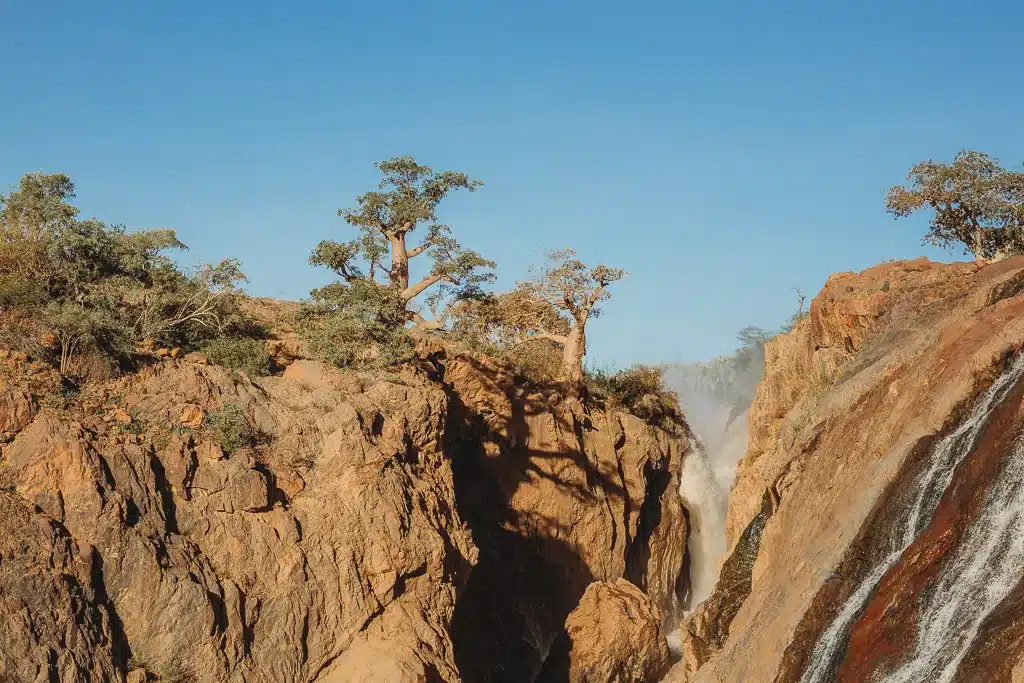
Baobabs are one of the defining features of the Epupa landscape, with large trees growing among the rocky slopes and around the river.

Their enormous trunks and strange silhouettes make them spectacular photographic subjects, particularly when they can be framed together with the Kunene or the waterfalls.

Some of the baobabs in the wider region are believed to be hundreds of years old, and their presence adds another layer of history to an already ancient-looking landscape.

The lodge offers guided walks along the river and through the surrounding landscape, where guests can learn more about the area’s trees and plants while seeing the baobabs up close.

Read more: The Baobabs of Epupa Falls

Epupa Falls and the Makalani palms

If the baobabs are the giants of the rocky landscape, the Makalani palms are what give the riverbank its distinctive character.

They form pockets of green along the Kunene, creating an almost surreal transition between the dry mountains and the river.

From above, the contrast is particularly striking:

dry rock,

green palms,

blue-green water,

and white water tumbling through the gorge.

It’s one of the reasons Epupa photographs so beautifully.

But don’t experience the falls only through a camera.

Some of the best moments happen when you put it down.

epupa falls trees from walks along river

What happens to the falls in the rainy season?

The amount of water flowing over Epupa Falls changes throughout the year.

Rainfall in the Angolan highlands is particularly important because the Kunene’s catchment extends far upstream.

During periods of high flow, the river can transform dramatically.

The falls become louder.

The spray increases.

Water pushes through channels that may be relatively quiet during the dry season.

And the landscape around the river can become greener.

However, there is no simple calendar date when the falls suddenly become “full.”

The timing depends on rainfall throughout the catchment and water movement upstream.

This is why we recommend thinking about the seasons as a guide rather than booking a trip around a promise of a particular water level.

For the full month-by-month breakdown, see: Best Time to Visit Epupa Falls

epupa falls from epupe viewpoint

Is Epupa Falls worth visiting in the dry season?

Absolutely.

Even when the Kunene is at lower flow, Epupa Falls does not disappear.

The river is perennial, and the falls continue flowing through the dry months. They may not have the same volume or drama as during periods of high water, but the combination of waterfalls, rock formations, palms, baobabs and mountains remains spectacular. 

In fact, the dry season has some advantages.

The weather is generally more predictable.

The roads are usually easier.

The skies are often beautifully clear.

And the contrast between the dry landscape and the river becomes particularly pronounced.

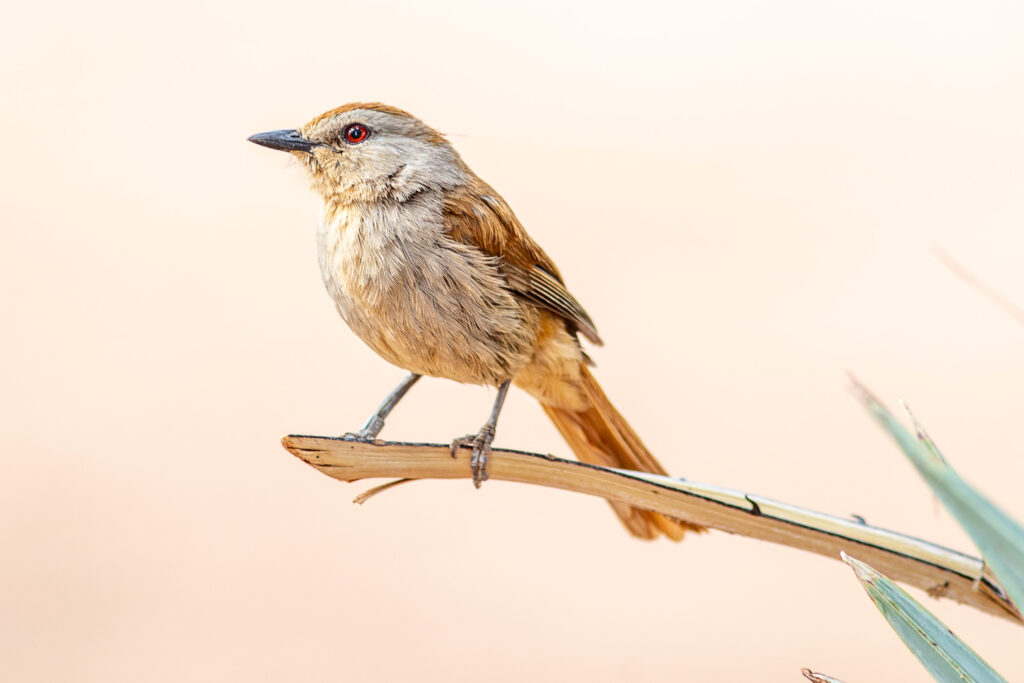
birding at epupa falls, namibia

What can you do at Epupa Falls?

You could simply arrive, find a comfortable spot overlooking the river and do absolutely nothing.

We would support this plan.

After the drive into Kaokoland, sitting beside the Kunene and listening to the falls is a perfectly respectable activity.

But if you want to explore, there is plenty to do.

1. Visit the falls viewpoint

The obvious place to start is the viewpoint overlooking the falls.

The lodge has its own viewing deck, with views across the top of the waterfalls and the surrounding valley. There is also a bar and restaurant, making it an excellent place to settle in for sunset.

Late afternoon is particularly beautiful.

The light softens.

The mountains begin to glow.

And the temperature finally stops trying to cook you.

2. Walk along the Kunene River

A guided walk along the river gives you a completely different perspective of Epupa.

Instead of looking at the falls from above, you experience the riverbank itself.

You’ll encounter palms, baobabs and other plants adapted to life along the Kunene, while your guide can explain the landscape and its uses.

The lodge offers guided walks both in the morning and afternoon. 

And yes, bring the camera.

3. Go birding

The river creates an extraordinary habitat for birdlife in an otherwise dry region.

The combination of permanent water, riverine vegetation, palms, rocky cliffs and surrounding mountains supports a surprising diversity of species.

The lodge offers dedicated birding experiences, including opportunities to explore the river and surrounding landscape with a guide.

If you’re a serious birder or photographer, let us know when you book.

We can help arrange your activities around your interests.

Read more: Birding at Epupa Falls

4. Experience Himba culture

Epupa is not simply a beautiful landscape.

It is home.

The Ovahimba communities of the Epupa region have lived in this landscape for generations, and a respectful cultural experience offers visitors an opportunity to learn more about their traditions, daily life and relationship with the environment.

The lodge has maintained relationships with the local Himba community for decades and offers guided cultural experiences with a field guide and interpreter.

This is one of the experiences that can transform a visit from:

“We saw Epupa Falls.”

into:

“We experienced Epupa.”

Read more: The Himba Culture Experience at Epupa Falls

boy milking a boy in himba village

Epupa Falls and the Himba community

The river and the people of Epupa are inseparable.

The Kunene provides water, food and resources, while the surrounding landscape supports traditional livestock herding and other aspects of daily life.

The lodge’s relationship with the local community goes back decades, and that connection is an important part of how the lodge operates today.

If you visit a Himba village, approach the experience with curiosity and respect.

You’re visiting somebody else’s home.

That should always be the starting point.

Epupa Falls or Ruacana Falls?

People sometimes confuse the two.

They are both on the Kunene River, but they are very different waterfalls.

Ruacana Falls

Ruacana is upstream and is strongly influenced by the Ruacana hydroelectric scheme, which regulates water flow.

Epupa Falls

Epupa is not a controlled waterfall in the same way.

Its flow responds to the natural movement of the Kunene, including rainfall in the Angolan catchment and upstream water management.

This is why Epupa can change so dramatically between periods of low and high flow. 

When is the best time to visit Epupa Falls?

For most travellers, May to July is an excellent period to visit, with relatively comfortable temperatures and generally good travelling conditions.

April and May can be particularly interesting if you’re hoping to see increased river flow following the rainy season.

August and September bring dry conditions and clear skies, although temperatures rise.

The rainy season can bring greener landscapes and potentially dramatic river conditions, but it also makes the journey less predictable.

We’ve written a complete guide to the seasons here: Best Time to Visit Epupa Falls

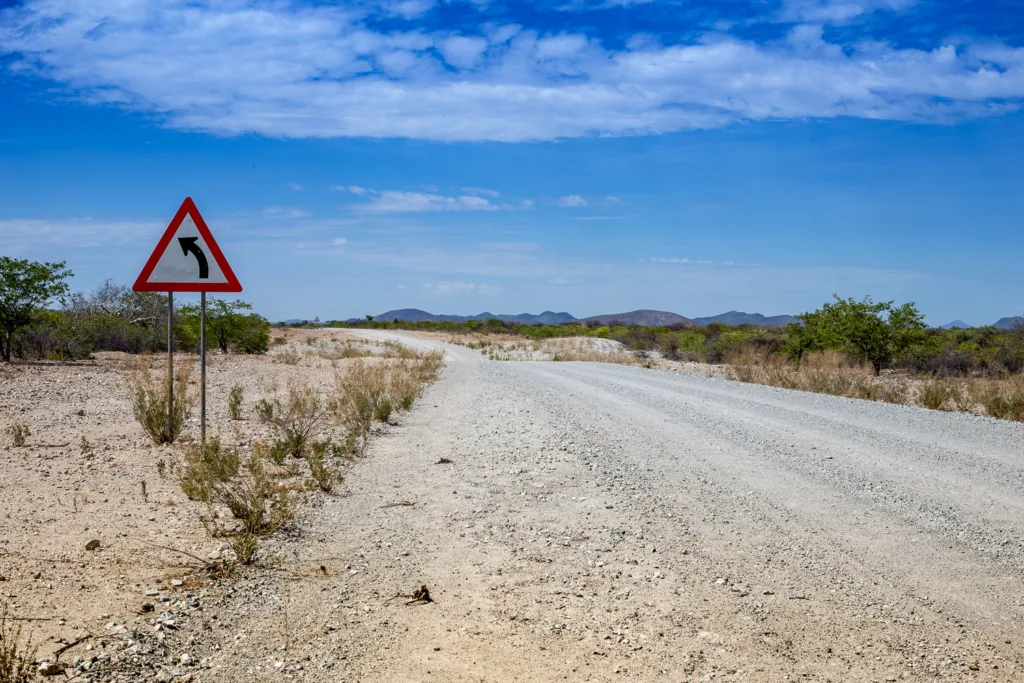
opuwo to ruacana road

How do you get to Epupa Falls?

There are two main approaches.

From Opuwo

Drive north on the C43:

Opuwo → Okongwati → Epupa

The route is approximately 199 km from Opuwo, with the lodge currently estimating around four hours under normal conditions. 

From Ruacana

Take the D3700 west along the Kunene River towards Epupa.

This is one of the most scenic approaches, passing through Swartbooisdrift and following the river towards the valley.

The roads are gravel, and conditions can change after rain.

For the practical details: Epupa Falls Road Conditions

For detailed route instructions: Directions to Epupa Falls

Epupa Falls Lodge signpost

How long should you stay at Epupa Falls?

Please don’t drive all the way to Epupa for one night if you can possibly avoid it.

We recommend at least two nights.

That gives you enough time to:

  • see the falls
  • enjoy the river
  • take a guided walk
  • experience Himba culture
  • go birding
  • watch the sunset
  • simply slow down

And that last one matters.

Epupa isn’t really a destination you “tick off.”

It’s a place to inhabit for a little while.

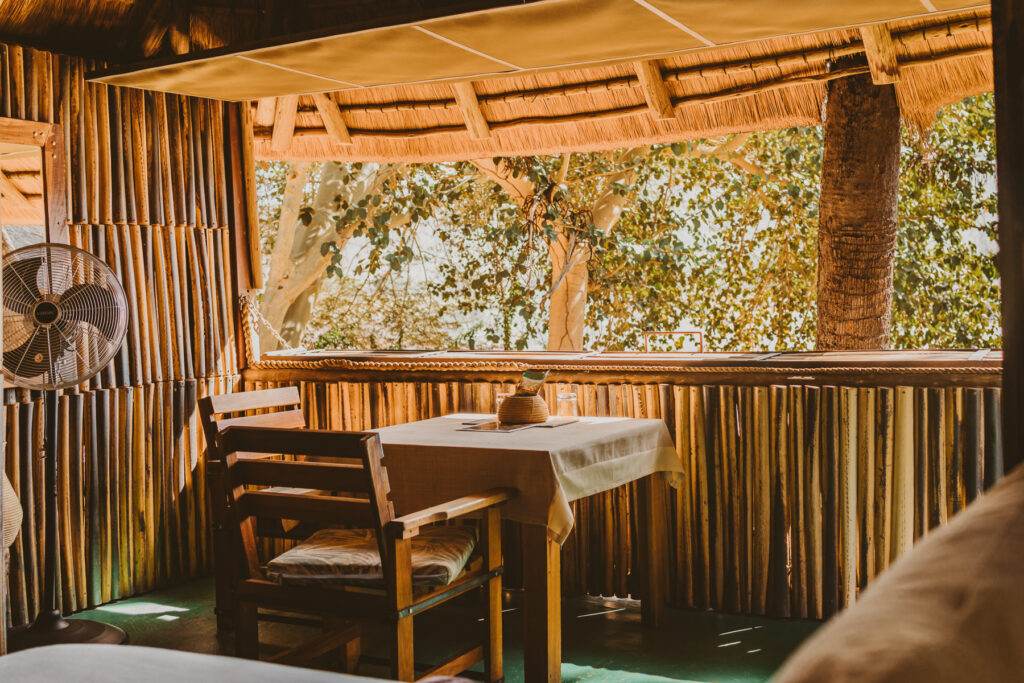
epupa falls lodge river view chalet

Where should you stay?

This is where the location of your accommodation matters.

There are several places to stay in the Epupa area, but Epupa Falls Lodge sits directly on the banks of the Kunene River, just moments from the falls. The lodge has been family-run since 1990 and offers river-view chalets, family accommodation and campsites. Epupa Falls Lodge

That means you don’t need to drive back and forth to experience the river.

You can wake up beside it.

Have breakfast overlooking it.

Spend the afternoon exploring.

Return for sunset.

And fall asleep to the sound of the water.

That is rather a lovely way to experience Epupa.

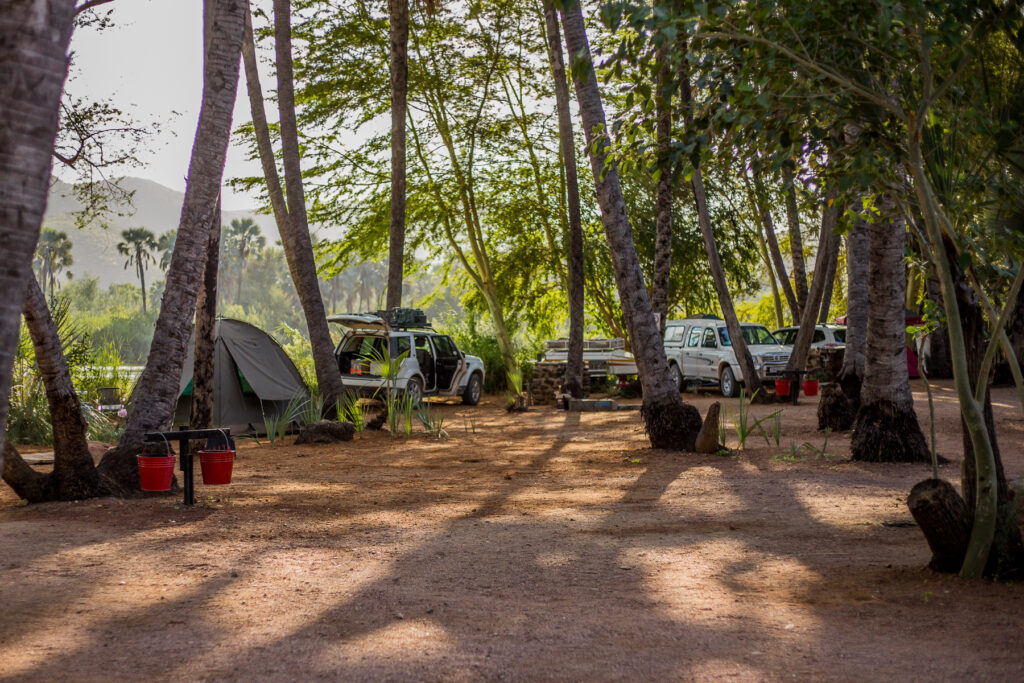
camping at epupa falls lodge and campsite

Stay beside the falls

Epupa Falls Lodge began as a campsite in the early 1990s and has grown into the small, family-run lodge it is today. The lodge remains closely connected to the river and local community, with accommodation positioned directly along the Kunene. Epupa Falls Lodge

Today, guests can choose from:

  • River View Chalets
  • Family accommodation
  • Honeymoon accommodation
  • Riverfront campsites

Dinner and breakfast are included with lodge accommodation, and guests can arrange cultural and nature-based experiences during their stay. 

It is not a huge resort.

And that’s intentional.

Epupa is a place where the landscape should remain the main attraction.

epupa falls during sunset drive at epupa falls lodge

Why make the journey to Epupa Falls?

Because there are places in Namibia where you arrive and immediately understand why people made the effort to get there.

Epupa is one of them.

It’s the contrast that gets you.

A river in the desert.

Palms beside bare mountains.

Baobabs above waterfalls.

Angola on the other side of the river.

The sound of falling water after hours of gravel road.

And a community whose connection to this landscape stretches back far beyond the arrival of tourism.

Epupa isn’t Namibia’s easiest destination.

It isn’t the quickest.

It isn’t the most polished.

But perhaps that’s exactly why it stays with you.

Planning your visit to Epupa Falls?

We’ve put together a few guides to help you plan the journey:

Wondering when to go?
Best Time to Visit Epupa Falls

Driving yourself?
Epupa Falls Road Conditions

Need the actual route?
Directions to Epupa Falls

Want to explore beyond the waterfall?

The Baobabs of Epupa Falls
Birding at Epupa Falls
The Himba Culture Experience

And if you’re ready to stay beside the Kunene River:

Come to the end of the road.

Epupa Falls Lodge is one of the closest places to stay to the falls, sitting directly on the Kunene River, with accommodation, camping, meals and guided experiences available

travelling to Epupa with children blog header
5 Reasons Bird Photographers and Enthusiasts Should Visit Epupa Falls in Namibia