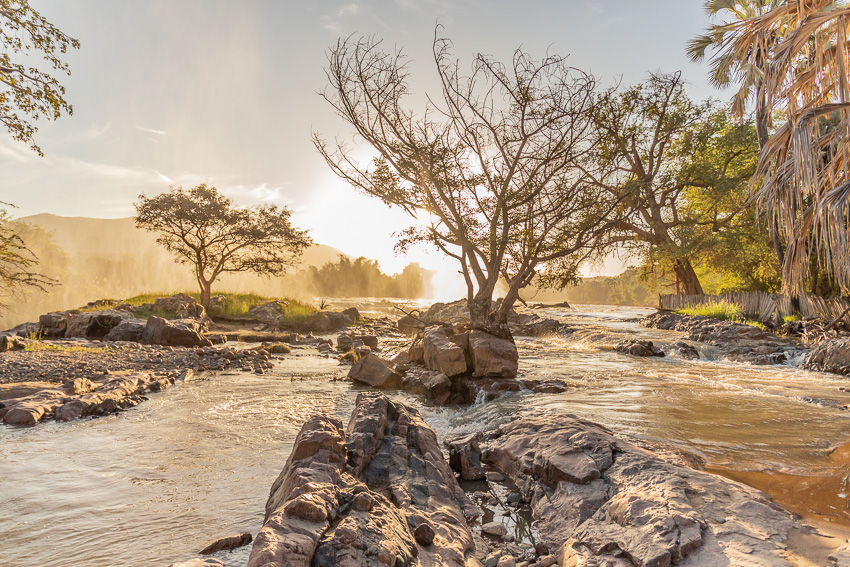
There are many reasons to travel all the way to Epupa Falls in northern Namibia.
The Kunene River.
The waterfalls.
The mountains.
The enormous makalani palms lining the riverbanks.
The fascinating culture of the Ovahimba people.
And then there are the baobabs.
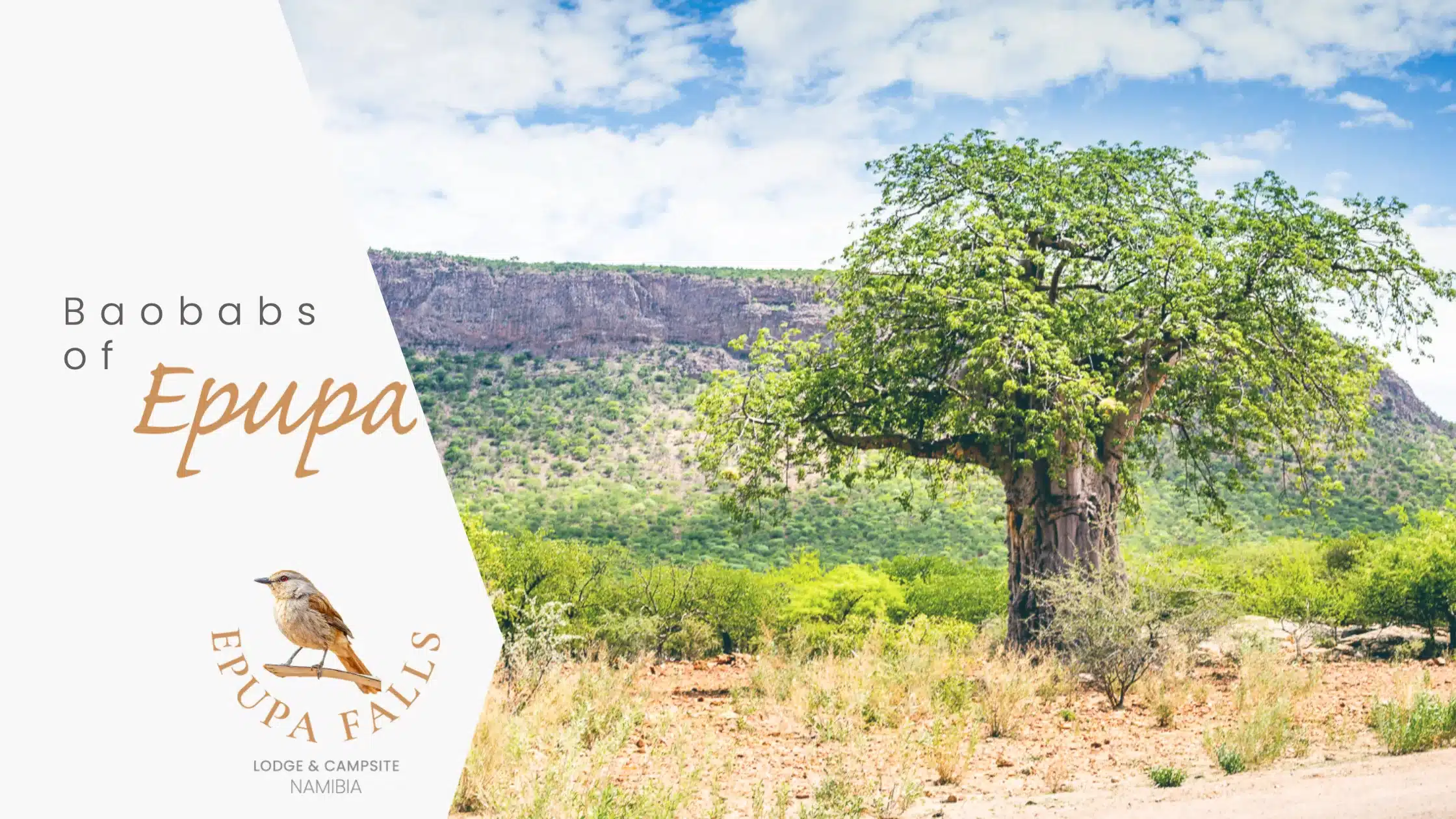
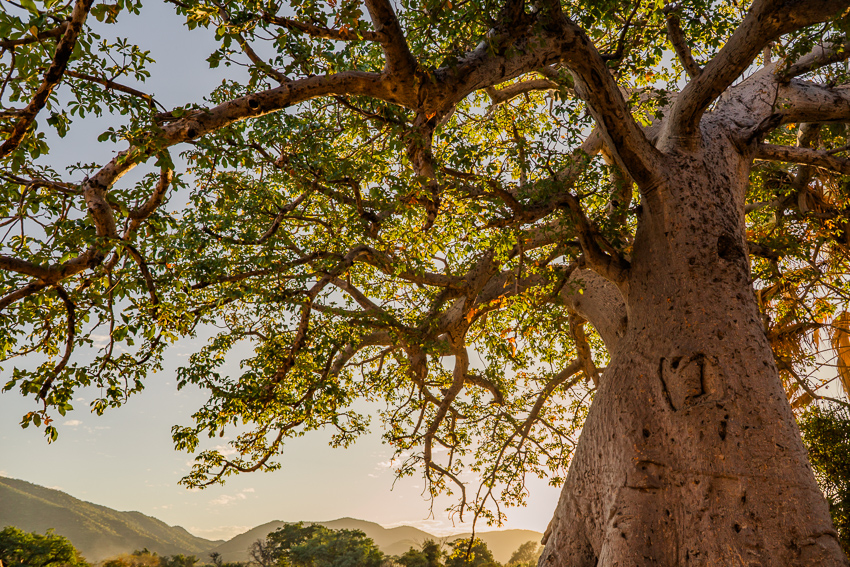
Standing among the dry mountains and rocky landscapes of Kaokoland, these extraordinary trees look almost as though they belong to another world. Their enormous trunks, strange silhouettes and ability to survive in some of Namibia’s harshest landscapes make them one of the most memorable features of the Epupa Falls area.
A conservancy is a community-run organisation that manages natural resources and creates income from them in a sustainable way.
The baobabs found around Epupa Falls are African baobabs, Adansonia digitata, a species naturally occurring across much of tropical and southern Africa, including Namibia.
They are difficult to mistake for anything else.
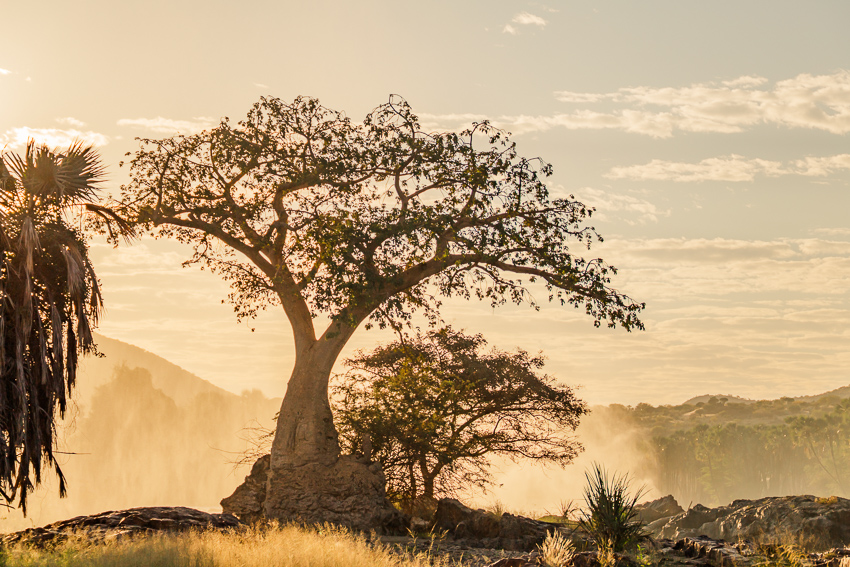
Their trunks can become enormously thick, while their branches spread above them in a shape that has earned baobabs some wonderfully imaginative nicknames. For much of the year they stand leafless, making them look particularly dramatic against the blue skies and rocky mountains of Kaokoland.
But there is far more to these unusual trees than their appearance.
Baobabs are exceptionally well adapted to seasonal dry environments. Their swollen trunks can store water, helping them survive long periods without reliable rainfall. They can also live for centuries. One baobab in Namibia has been radiocarbon dated to around 1,275 years old, making it the oldest known flowering tree dated using that method.
So when you stand beneath one of these trees in Epupa, you are looking at something that is very much more than a particularly large tree.
You are looking at a survivor.
In northern Namibia, conservancies are part of everyday life. They help communities benefit from tourism, wildlife and the land they live on. They can provide employment, training and income while giving local people a reason to protect the natural resources around them.
Epupa Falls Lodge is situated in the Epupa Conservancy, in the Kunene Region.
This is not conservation happening somewhere far away from the lodge. It is part of the place we live and work in.
Our relationship with the local Himba community also goes back decades. You can read more about how the lodge grew from a campsite into a family-run lodge on the river in Our Story.
What makes the baobabs around Epupa Falls particularly beautiful is their setting.
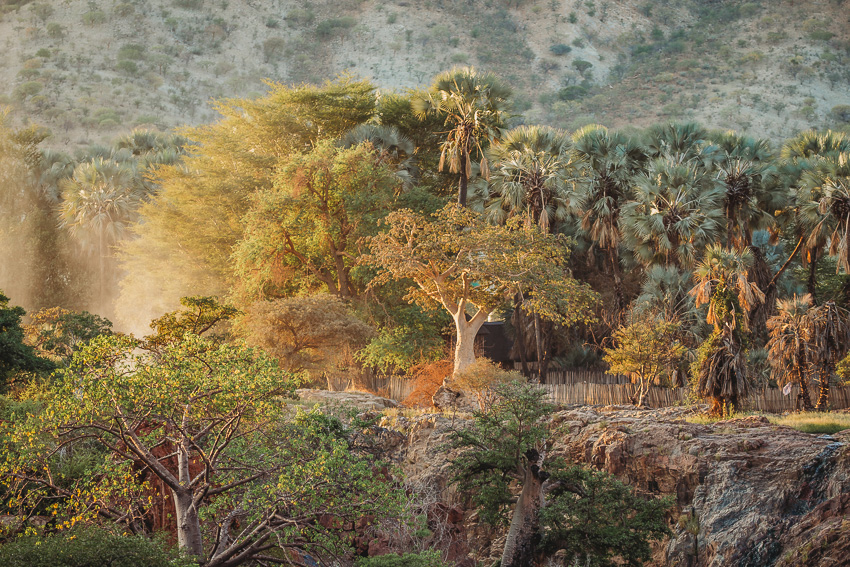
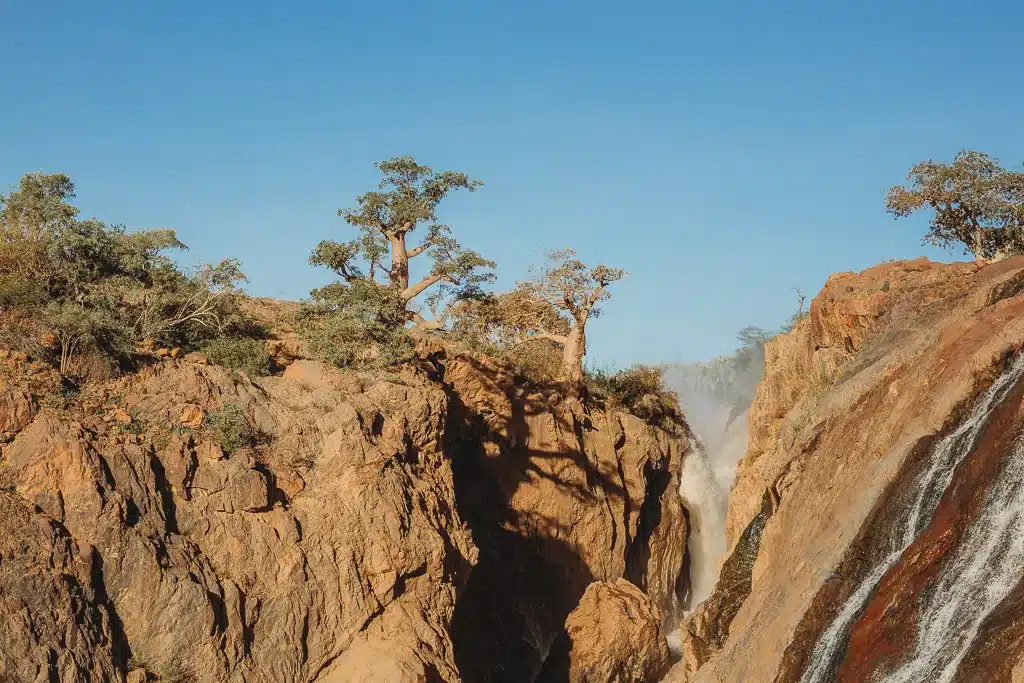
Here, the dry landscape of Kaokoland meets the Kunene River, which forms the border between Namibia and Angola. The river creates a ribbon of green through an otherwise rugged landscape, with makalani palms and other riverine vegetation growing along its banks. The Epupa waterfalls then tumble through the rocky gorge, with baobabs standing among the cliffs and surrounding landscape. Epupa Falls Lodge
It is this combination that makes Epupa so visually unusual.
You can have a dry, almost desert-like mountain landscape on one side, and a river full of life on the other. Add enormous baobabs, palms and the sound of falling water, and you have one of the most distinctive landscapes in northern Namibia.
The baobabs almost seem to belong there as permanent guardians of the river.
You don’t necessarily need to go searching for them.
Baobabs can be seen in and around the Epupa Falls area, including along the river and on the rocky slopes surrounding the falls. Some make particularly striking photographic subjects because they can be seen together with the Kunene River, waterfalls and surrounding mountains.
One of the best ways to experience the landscape is on foot.
At Epupa Falls Lodge, our guided walks take guests along the riverbank and through the surrounding landscape, offering an opportunity to learn more about the plants and trees found in this unusual environment.
An early morning river walk is particularly beautiful.
The cooler temperatures make walking more comfortable, the light is softer for photography, and the route takes you past some of our favourite viewpoints and baobabs around the falls.
For guests who want to understand more about the landscape rather than simply photograph it, our guided afternoon walk is another wonderful option.
Walking upstream along the Kunene River, you can learn about some of the plants that have adapted to life in this dry environment, including the remarkable baobab.
These walks also give you time to slow down and notice the smaller details of Epupa.
The trees.
The rocks.
The river.
The changing light.
And the extraordinary contrast between water and desert that makes this part of Namibia so special.
Baobabs have long been important to communities living in the regions where they grow. Different parts of the tree have traditionally been used for food, medicine, fibre and practical purposes, and the species has considerable cultural and economic importance across Africa.
In Kaokoland, the relationship between people and the natural environment is particularly interesting because the landscape is not simply something to look at.
It is home.
The Kunene River provides water and supports people, livestock and wildlife, while the plants growing along its banks have practical uses and cultural significance.
A guided walk is therefore more than simply a nature outing. It is an opportunity to understand a little more about how people have lived with this landscape for generations.
The baobabs are just one piece of the puzzle.
Epupa Falls itself is a spectacular series of waterfalls along the Kunene River, stretching across roughly 1.5 kilometres, with the largest individual drop around 37 metres.
But the real magic of Epupa is the combination of things you find here.
You can watch the sunset over the Kunene River.
Walk beneath enormous baobabs.
Explore the riverbank.
Take a guided nature walk.
Learn more about Ovahimba culture.
Photograph the falls from different viewpoints.
Or simply sit somewhere quiet and listen to the water.
And after the long drive into Kaokoland, that last option is surprisingly easy to recommend.
If you are travelling to Epupa Falls, staying close to the river means you can experience the landscape beyond a quick viewpoint stop.
Epupa Falls Lodge is situated on the banks of the Kunene River, just moments from the falls, with views across this remarkable landscape. The lodge has been family-run since 1990 and offers accommodation, camping and activities including guided walks, sundowner outings and cultural experiences.
And perhaps the best part?
You don’t have to go looking for the baobabs.
They’re already waiting.
Plan your stay at Epupa Falls Lodge and discover the waterfalls, river, mountains and ancient baobabs of Kaokoland.